Events near the Latin Quarter
- 🚶Treasure hunt in the heart of the Quartier Latin: Le Paris est tout vert
- 🚶The Paris of the Alchemists - esoteric tour
- 🏃Paris Sport Dimanches Estivaux: Fitness and Stretching at the Arènes de Lutèce, Paris 5
- 🚶Guided tour: The history of prostitution in Paris
- 🏃Outdoor senior sports: gentle gym and fitness walking with LE KIOSQUE SPORTIF
- 🎤Daamia
- 🎨The Raft of the Medusa
- 🎤The Tale of the Plump Worm
- 🎨Chocottes and Chamallows - Special Halloween Children's Show
- 🎨The Phantom of Canterville - Children's Show After Oscar Wilde
Monuments & viewpoints
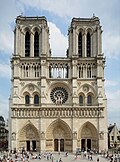 Notre-Dame de Paris
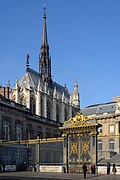 Sainte Chapelle
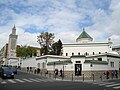 Grand Mosque of Paris
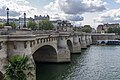 Pont Neuf
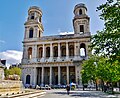 Church of Saint-Sulpice
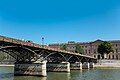 Pont des Arts
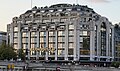 La Samaritaine
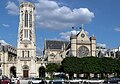 Saint-Germain l'Auxerrois
Notre-Dame de Paris, often referred to simply as Notre-Dame, is a medieval Catholic cathedral on the Île de la Cité, in the 4th arrondissement of Paris, France. It is the cathedral church of the Roman Catholic Archdiocese of Paris. Wikipedia · CC BY-SA
The Sainte-Chapelle is a royal chapel in the Gothic style, within the medieval Palais de la Cité, the residence of the Kings of France until the 14th century, on the Île de la Cité in the River Seine in Paris, France. Wikipedia · CC BY-SA
Museums & galleries
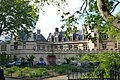 Musée de Cluny
 treasury of Notre-Dame de Paris
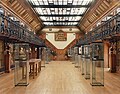 Museum of the History of Medicine
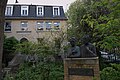 Musée Curie
- 🖼️Art Absolument
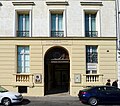 Adam Mickiewicz Museum
- Musée Boleslas Biegas
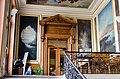 Musée de Minéralogie
The Musée de Cluny (French pronunciation: [myze də klyni]), officially Musée de Cluny-Musée National du Moyen Âge (lit. 'Cluny Museum-National Museum of the Middle Ages'), is a museum of medieval art in Paris. Wikipedia · CC BY-SA
The Museum of the History of Medicine (French: Musée d'histoire de la médecine [myze distwaʁ də la medsin]) is a medical museum in the 6th arrondissement of Paris, France. Wikipedia · CC BY-SA
Restaurants in the Latin Quarter
- 🍽️La Petite Périgourdine
- 🍽️Le Petit Prince de Paris
- 🍽️Petit Saïgon
- 🍽️Pizza Roma
- 🍽️La Pie Noir
- 🍽️Asia Room
- 🍽️Le Bistro du Périgord
- 🍽️Tran Tran Zai
- 🍽️La Table de Colette
- 🍽️La dédicace
Bars in the Latin Quarter
- 🍸Café Gisèle
- 🍸Le Piano Vache
- 🍸Le Bistrot des artistes
- 🍸L'Annexe
- 🍸The Bombardier
- 🍸Sourire Galande
- 🍸La Bodega Paris V
- 🍸Aux Émotions
- 🍸Hôtel Maison Colbert
- 🍸Le Noddi
Cafés in the Latin Quarter
- ☕Jozi Brunch Pantheon
- ☕Le Palais
- ☕TRAM café
- ☕Café Dalbodrée
- ☕Chamie
- ☕Café Maa
- ☕Brunch aux olives
- ☕Bisous Sucrés
- ☕Snowvan
- ☕sidonie
Pâtisseries in the Latin Quarter
- 🧁Maison Forest
- 🧁Christian Constant
- 🧁La Maison d'Isabelle
- 🧁Les Belles Envies
- 🧁Bertrand's
- 🧁Le Bonbon au Palais
- 🧁Cookies by Moon's
- 🧁Cupkie
Bookshops
- 📚Présence Africaine
- 📚Les Éditeurs Réunis
- 📚Le Livre Penseur
- 📚Librairie Eyrolles
- 📚L'Harmattan - Librairie Internationale
- 📚J. Vrin
Cinemas, theatres & live music
- 🎭EXPAT PUB QUIZ (La Pomme d'Ève)
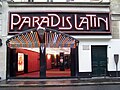 Paradis Latin
- 🎭Travel with Jules Verne in an unforgettable immersive show at the Grand Hôtel des Rêves!
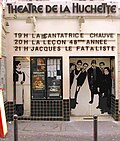 Théâtre de la Huchette
- 🎭La Comédie Saint-Michel
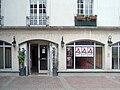 Théâtre Mouffetard
- 🎭Théâtre de l'Île Saint-Louis - Paul Rey
- 🎭MPAA/Saint-Germain
The Paradis Latin is a theater at number 28, rue du Cardinal Lemoine, in the Latin Quarter of Paris, in the fifth arrondissement, near Notre-Dame, the Panthéon, and the Tour d'Argent restaurant. The closest métro stations are Cardinal Lemoine and Jussieu. Wikipedia · CC BY-SA
The Théâtre de la Huchette (French pronunciation: [teɑtʁ də la yʃɛt]) is a theatre in Paris. This small theatre in Paris' Left Bank, located at 23 rue de la Huchette in the 5th arrondissement, is known for playing Eugène Ionesco's absurdist double-bill of The Lesson and The Bald Soprano in permanent… Wikipedia · CC BY-SA
Markets & delis
- 🧺Marché Maubert
- 🥘Le Comptoir gastronomique européen
- 🥘Pierre Oteiza
- 🥘Maison de la Lozère
- 🥘La Coop Paris
- 🥘Lafitte
Parks & gardens
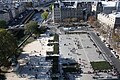 jardin de la place Jean-Paul-II
 Parc des Rives de Seine
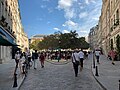 square de la Place-Dauphine
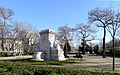 square Barye
- 🌷Jardin des Arts - Albert Schweitzer
- 🌷Jardin Tino Rossi - Musee de la Sculpture en Plein Air
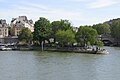 square du Vert-Galant
- 🌷Square Priou - Valjean
The Square du Vert-Galant is a small, triangular park pointing downstream located at the western tip of the Ile de la Cité, next to the Pont Neuf, in the First Arrondissement of Paris. It was created in 1884 by joining two small islands to the larger island. Wikipedia · CC BY-SA
Where the street names come from
- place Alfred Kastler — Alfred, Henri, Frédéric Kastler (Guchwiller, 1902-Bandol, 1984), agrégé in physical sciences; research director at the CNRS, member of the Academy of Sciences in 1964. He received the gold medal of the CNRS in 1965 and the Nobel Prize in Physics in 1966. Grand officer of the Legion of Honour and of the National Order of Merit.
- rue Amyot — Jacques Amyot (1513-1593), bishop of Auxerre, writer; near the quartier des Ecoles.
- place André Honnorat — André Honnorat (1868-1950), French politician.
- rue André Mazet — André Mazet (1793-1821), physician, who died of the yellow fever he had gone to Barcelona to study.
- rue Antoine Dubois — Antoine Dubois (1756-1837), surgeon; near the Ecole pratique de médecine.
- pont au Change — The money changers settled here in 1141, by virtue of an ordinance of Louis VII.
- pont au Double — The toll for this bridge was one double tournois.
- place August Strindberg — Johan August Strindberg (Stockholm, 1849-Stockholm, 1912), Swedish writer, playwright and painter.
- quai aux Fleurs — The site of a flower market.
- rue Basse des Carmes — Opened on the site of the former Carmelite convent.
- place Benjamin Fondane — Benjamin Fondane (Iași, Romania, 1898-murdered at Auschwitz-Birkenau in October 1944), French poet and philosopher.
- rue Blainville — Henri Marie Ducrotay de Blainville (1777-1850), naturalist; near the Jardin des Plantes.
- rue Boutarel — Mr. Boutarel, owner of the land on which the street was opened.
- rue Boutebrie — Corruption of the name of Erembourg de Brie, who lived here at the end of the 13th century.
- impasse Bouvart — Name of an owner.
- rue Budé — Guillaume Budé (1467-1540), French philologist, was provost of the merchants in 1522.
- rue Casimir Delavigne — Jean François Casimir Delavigne (1793-1843), French poet and playwright; near the Luxembourg theatre of the Comédie Française.
- allée Célestin Hennion — Célestin Hennion (Gommegnies (Nord), 1862-Le Havre, 1915), great reformer of the organisation of the French police. Appointed to succeed Louis Lépine as prefect of police in 1913, then in 1914, with the rank of ambassador, Commissioner General of the Government of the Republic to the Belgian Government based near Le Havre.
- rue Champollion — Jean François Champollion the younger (1790-1832), French Egyptologist who was the first to decipher Egyptian hieroglyphic characters.
- rue Chanoinesse — Close to the cathedral; a reminder of the dwellings of the Canons.
- impasse Chartière — Emmeline la Charretière, a property owner, had transferred, in 1254, two houses on the street to the collège des Bons Enfants d'Arras.
- rue Christine — Built at the time of the birth of Christine de France (1606-1663), second daughter of Henri IV and Marie de Médicis.
- rue Clément — Dom François Clément (1714-1793), Benedictine, historian.
- rue Clotaire — Clotaire I, King of France; died in 561; near the former abbey of Sainte-Geneviève.
- rue Clotilde — Clotilde (475-545), wife of Clovis; near the former abbey of Sainte-Geneviève.
- rue Clovis — Clovis I (465-511), King of the Franks; near the former abbey of Sainte-Geneviève.
- rue Cochin — Jean Denys Alaric Cochin (1789-1841), philanthropist, mayor and member of parliament for Paris.
- rue Corneille — Pierre Corneille (1606-1684), dramatist; near the Odéon theatre.
- rue Crébillon — Prosper Jolyot de Crébillon (1674-1762), French dramatist; near the Odéon theatre.
- rue Cujas — Jacques Cujas (1522-1590), jurist; near the Faculty of Law.
- rue Cuvier — Baron Georges Chrétien Léopold Dagobert Cuvier (1769-1832), French zoologist and palaeontologist; near the Muséum d'histoire naturelle.
- pont d'Arcole — On 28 July 1830, a young man named d'Arcole was killed on this bridge while planting the tricolor flag there.
- rue d'Arcole — Situated opposite the pont d'Arcole.
- rue d'Arras — The collège d'Arras had been built in this street in 1332.
- rue d'Écosse — In the vicinity of the collège des Ecossais, originally founded in the rue des Amandiers.
- quai d'Orléans — Gaston d'Orléans, brother of Louis XIII.
- rue d'Ulm — In memory of the capitulation of Ulm, a town which the Austrians surrendered to the French army on 17 October 1805.
- rue Dante — Dante Alighieri (1265-1331), the great Italian poet, is said by tradition to have lived in the district.
- rue Danton — Georges Jacques Danton (1759-1794), the famous member of the Convention; near the house he was living in at the time of his death.
- passage Dauphine — Near the rue Dauphine. So called in honour of the Dauphin, son of Henri IV.
- rue Dauphine — So called in honour of the Dauphin, son of Henri IV.
- quai de Béthune — Maximilien de Béthune, Duke of Sully (1560-1641), friend and minister of Henri IV.
- rue de Bièvre — This street ran along the former course of the Bièvre.
- quai de Bourbon — This quay owes its name to the royal family of Bourbon.
- rue de Bretonvilliers — It was opened by Claude Le Ragois de Bretonvilliers, owner of a vast piece of land; his mansion occupied the east side of the street.
- rue de Brosse — Salomon de Brosse, wrongly called Jacques de Brosse (died in 1626), architect of the Palais du Luxembourg and of the portal of the church of Saint-Gervais; near that church.
- rue de Cluny — Runs along the Cluny museum.
- rue de Condé — The Hôtel de Condé had its main entrance there.
- quai de Gesvres — Quay built on land granted by the king to the Marquis de Gesvres.
- rue de Harlay — Laid out on land granted to Achille de Harlay, comte de Beaumont (1536-1619), French magistrate; first president of the Parlement of Paris.
- place de l'Abbé Basset — François, Edmond, Stéphane, Marie Basset (Versailles, 1899-Mauthausen, 1943), curate at the church of Saint-Etienne-du-Mont in 1935, deported and martyred at Mauthausen.
- rue de l'Abbé de l'Épée — Abbé Charles Michel de l'Epée (1712-1789), founder of the Institution for Deaf-Mutes; near this establishment.
- rue de l'Ancienne Comédie — Hôtel des Comédiens français, at no. 14.
- pont de l'Archevêché — Near the former Archbishop's Palace.
- quai de l'Archevêché — Near the former Archbishop's Palace.
- rue de l'École de Médecine — In the vicinity of the Ecole de Médecine.
- rue de l'École Polytechnique — Leads to the Ecole polytechnique.
- rue de l'Épée de Bois — Former shop sign.
- rue de l'Éperon — Former shop sign.
- place de l'Estrapade — The punishment of the strappado was carried out on this square (a torture in which the victim was dropped on the end of a rope either into the water or to within a few feet of the ground).
- rue de l'Estrapade — Led to the square where the strappado once stood.
- quai de l'Horloge — Near the clock of the Palais de Justice.
- rue de l'Hôtel Colbert — Colbert owned a mansion located at no. 20 of this street.
- port de l'Hôtel de Ville — Near the quai de l'Hôtel de Ville.
- quai de l'Hôtel de Ville — Runs alongside the Hôtel de Ville.
- rue de l'Hôtel de Ville — Near the Hôtel de Ville.
- carrefour de l'Odéon — Near the Odéon theatre.
- place de l'Odéon — Near the Odéon theatre.
- rue de l'Odéon — Leads to the Odéon theatre.
- rue de la Bûcherie — Near the former port aux Bûches.
- rue de la Cité — Crosses the Île de la Cité.
- rue de la Colombe — Probably a former shop sign.
- place de la Contrescarpe — Near the former rue de la Contrescarpe Saint-Marcel, now rue Blainville, so named because of the Saint-Marcel counterscarp.
- quai de la Corse - Pasquale Paoli — French province. Pasquale Paoli (Morosaglia, 1725-London, 1807), Corsican politician, philosopher and general.
- rue de la Harpe — So called from the 13th century, after a shop sign.
- rue de la Huchette — House known as la Huchette, probably because of its sign, which in the 14th century belonged to the chapter of Notre-Dame.
- rue de la Montagne Sainte-Geneviève — This street climbs the rise known as the montagne Sainte-Geneviève, named after the abbey.
- square de la Mutualité — Serves the Palais de la Mutualité.
- rue de la Parcheminerie — The parchment makers had settled here in former times.
- passage de la Sorbonne — Near the rue de la Sorbonne.
- place de la Sorbonne — Square located in front of the Sorbonne, a former college founded by Robert de Sorbon in the 13th century.
- rue de la Sorbonne — Runs alongside the Sorbonne.
- pont de la Tournelle — From the Tournelle, part of the Philippe-Auguste city wall, which reached the Seine at this spot.
- port de la Tournelle — Runs alongside the quai de la Tournelle.
- quai de la Tournelle — From the Tournelle, part of the Philippe-Auguste city wall, which reached the Seine at this spot.
- rue de Lanneau — Pierre Antoine Victor de Lanneau (1758-1830), French Theatine religious educator, founder of the collège de Sainte-Barbe; in the vicinity of that college.
- rue de Latran — Commandery of Saint-Jean de Latran established on this spot as early as the 12th century.
- rue de Lutèce — Lutèce, the name Paris bore when it was confined within the limits of the Île de la Cité.
- rue de Médicis — Near the palais du Luxembourg, founded by Marie de Médicis.
- port de Montebello — Near the quai de Montebello.
- quai de Montebello — Jean Lannes, Duke of Montebello, born in 1769, killed at the battle of Essling on 22 May 1809.
- rue de Navarre — Named after the former collège de Navarre, now the École Polytechnique.
- rue de Nesle — Located on the site of the former hôtel de Nesle.
- rue de Poissy — In memory of the cattle market of Poissy; near the former calf market hall.
- rue de Pontoise — Near the former calf market hall; Pontoise was a major livestock-raising centre.
- rue de Quatrefages — Jean Louis Armand de Quatrefages de Bréau (1810-1892), naturalist; near the Muséum d'histoire naturelle.
- cour de Rohan — Rohan, an alteration of Rouen; this street stood next to the mansion of the archbishops of Rouen.
- rue de Savoie — Cut through in 1672, on the site of the mansion of the Dukes of Savoy.
- pont de Sully — Near the rue de Sully.
- rue de Tournon — François de Tournon (1489-1562), French cardinal; statesman, abbot of Saint-Germain des Prés; street laid out on land belonging to the abbey of Saint-Germain des Prés.
- rue des Anglais — Formerly inhabited by English students.
- rue des Arènes — Near the former Arènes de Lutèce.
- rue des Bernardins — Opened on the site of the garden of the Bernardins.
- impasse des Boeufs — Ox stables were probably located here.
- rue des Boulangers — Bakeries were formerly established here.
- rue des Carmes — The Carmelites settled here in 1318.
- rue des Chantiers — Timber yards were located here.
- rue des Chantres — Formerly inhabited by the cantors of Notre-Dame.
- allée des Défenseurs de la Caserne de la Cité — In tribute to the defenders of the Cité barracks, in the fighting from 19 to 24 August 1944.
- rue des Deux Ponts — Links the pont Marie to the pont de la Tournelle.
- rue des Écoles — Runs through the schools district.
- rue des Feuillantines — The Feuillantine nuns had their convent here, founded in 1622.
- rue des Fossés Saint-Bernard — The city ditches, on the site of which the street was laid out; near the former porte Saint-Bernard.
- rue des Fossés Saint-Jacques — The city ditches, on the site of which the street was laid out; near the former porte Saint-Jacques.
- quai des Grands Augustins — Convent of the Grands Augustins, so called in contrast to the monastery of the Petits Augustins.
- rue des Grands Augustins — Convent of the Grands Augustins, so called in contrast to the monastery of the Petits Augustins.
- rue des Grands Degrés — Led to a stone stairway giving access to the river.
- rue des Irlandais — The former Irish college was located at no. 5 of this street.
- quai des Orfèvres — Quay inhabited since the 17th century by goldsmiths and jewellers.
- passage des Postes — Opened off the rue des Postes, today the rue Lhomond; the name rue des Postes was a corruption of rue des Poteries or rue des Pots, after the pottery works established on this side.
- rue des Prêtres Saint-Séverin — Inhabited by the priests of the church of Saint-Séverin.
- rue des Quatre Vents — Former shop sign.
- rue des Trois Portes — So called from the 13th century onwards, because there were only three houses.
- rue des Ursins — From the hôtel des Ursins.
- rue des Ursulines — Laid out on the site of the former Ursuline convent.
- rue Descartes — René Descartes (1596-1650), French philosopher and scientist.
- rue Dolomieu — Déodat Guy Sylvain Tancrède Gratet, Marquis de Dolomieu (1750-1801), geologist; near the Jardin des Plantes.
- rue Domat — Jean Domat (1625-1696), French jurist; the Écoles district.
- place du Bataillon Français de L'O.N.U. en Corée — Battalion created by the French government on 24 August 1950. It was made up of volunteers, almost all of them veterans of the 1939-1945 war or of the Indochina war, who distinguished themselves during the Korean War (1951-1953).
- cité du Cardinal Lemoine — Jean Lemoine (1250-1313), French cardinal; near rue du Cardinal Lemoine.
- rue du Cardinal Lemoine — Jean Lemoine (1250-1313), French cardinal. Street cut through the grounds of the college he founded.
- rue du Chat qui Pêche — Former shop sign.
- rue du Cimetière Saint-Benoist — Formerly led to the cemetery of the parish of Saint-Benoît.
- rue du Cloître Notre-Dame — The part of this street between rue Chanoinesse and the parvis was located within the former Notre-Dame cloister.
- passage du Clos Bruneau — Locality name dating back to the Middle Ages.
- cour du Commerce Saint-André — This passage is lined with shops.
- rue du Fouarre — From the schools that were once strewn with straw (in Old French: feurre, fouarre).
- rue du Haut Pavé — Sloping street.
- rue du Jardinet — Near the former garden of the Hôtel de Vendôme.
- quai du Marché Neuf-Maurice Grimaud — Site of the former Marché Neuf. Maurice Grimaud (Annonay (Ardèche), 1913 - Paris, 2009), prefect of police during the events of May 68. Awarded the Aeronautics Medal. Commander of the Legion of Honour. Commander of the National Order of Merit. Commander of Arts and Letters.
- boulevard du Palais — Located in front of the Palais de Justice.
- place du Panthéon — This square surrounds the Panthéon.
- rue du Père Teilhard de Chardin — Pierre Teilhard de Chardin (Orcines, 1881-New York, 1955), French theologian, philosopher and palaeontologist.
- place du Petit Pont — Located at the head of the Petit Pont.
- rue du Petit Pont — Leads to the Petit Pont.
- rue du Pont de Lodi — Victory won in Italy on 10 May 1796 by General Bonaparte over the Austrians.
- rue du Pot de Fer — Former shop sign.
- rue du Puits de l'Ermite — Near a public well; Adam l'Hermite lived in the street in the 17th century.
- rue Du Sommerard — Alexandre Du Sommerard (1779-1842), French antiquarian, founder of the Cluny museum; near that museum.
- rue Dupuytren — Baron Guillaume Dupuytren (1777-1835), French surgeon; in the vicinity of the Ecole de médecine.
- place Edmond Rostand — Edmond Rostand (1868-1918), dramatic poet.
- place Émile Mâle — Emile Mâle (Commentry, 1862-Chaalis, 1954), French art historian. Member of the Académie française in 1927.
- place Emmanuel Levinas — Emmanuel Levinas (Kaunas (Lithuania), 1905-Paris, 1995), philosopher and writer.
- rue Erasme — Erasme (1467-1536), Dutch humanist.
- rue Félibien — Michel Félibien (1666-1719), Benedictine and historian of Paris; near the abbey of Saint-Germain des Prés.
- rue Francisque Gay — Francisque Gay (1885-1963), French journalist and statesman.
- rue Frédéric Sauton — Frédéric Sauton (1844-1910), architect, municipal councillor for the 5th arrondissement.
- rue Galande — Ran alongside the enclosure known as the clos de Garlande, property of the Garlande family. This enclosure was divided into plots at the beginning of the 13th century.
- rue Garancière — The Hôtel Garancière, built at the beginning of the 15th century.
- rue Gay-Lussac — Joseph Louis Gay-Lussac (1778-1850), chemist; district of the Schools.
- rue Gît-le-Coeur — Corruption of rue Gilles le Queux (the cook).
- rue Gracieuse — The Gracieuse family lived in this street in the 13th century.
- rue Grégoire de Tours — Gregory of Tours (538-594), bishop of Tours and historian.
- rue Guy de La Brosse — Guy de La Brosse, physician to Louis XIII, founder of the Jardin des Plantes, died in 1641; near this garden.
- impasse Hautefeuille — Near the rue Hautefeuille.
- rue Hautefeuille — This street probably owes its name to the tall, bushy trees that lined it or, according to Jules Quicherat, to the Roman substructures found at the corner of the rue Monsieur le Prince and the boulevard Saint-Michel, which in the Middle Ages are said to have been known as the château de Hautefeuille.
- place Henri Mondor — Henri Mondor (1885-1962), French surgeon and writer; near the Faculty of Medicine.
- place Hubert Curien — Hubert Curien (Cornimont (Vosges), 1924 - Loury (Loiret), 2005), crystallographer, university professor and Minister of Research.
- placette Jacqueline de Romilly — Jacqueline de Romilly (Chartres, 1913-Boulogne-Billancourt, 2010), philologist, woman of letters, professor and Hellenist.
- placette Jacques Duhamel — Jacques Duhamel (Paris, 1924-Paris, 1977), Resistance member, politician, former minister.
- rue Jacques-Henri Lartigue — Jacques-Henri Lartigue (1894-1986), photographer, painter and writer.
- passage Jaillot — Jean Baptiste-Michel Renou de Chavigné, known as Jaillot (Paris, 1710-Paris, 1780), lawyer, ordinary geographer to the King, author of numerous documents and maps of Paris.
- rue Jean Calvin — Jean Chauvin, known as Calvin (1509-1564), French religious reformer and writer.
- rue Jean de Beauvais — Jean de Dormans, cardinal, bishop of Beauvais and chancellor of France, founder of the collège de Dormans Beauvais and of its chapel under the patronage of Saint John.
- rue Jean du Bellay — Jean du Bellay (1492-1560), cardinal, bishop of Paris; near Notre-Dame.
- place Josette et Maurice Audin — Maurice Audin (Beja (Tunisia), 1932-Alger, 1957), mathematician and communist militant who disappeared in Algeria during the war.
- place Jussieu — Named after the Jussieu family, several members of which were distinguished botanists; in the vicinity of the Jardin des Plantes.
- rue Jussieu — Named after the Jussieu family, several members of which were distinguished botanists; in the vicinity of the Jardin des Plantes.
- rue Lacépède — Bernard Germain Etienne de La Ville, comte de Lacépède (Agen, 1756-1825, Epinay-sur-Seine), French naturalist and writer; in the vicinity of the Jardin des Plantes.
- rue Lagrange — Joseph Louis Lagrange (1736-1813), French mathematician.
- rue Laplace — Marquis Pierre Simon de Laplace (1749-1827), French astronomer, mathematician and physicist; in the vicinity of the Ecole polytechnique.
- rue Laromiguière — Pierre Laromiguière (1756-1837), French philosopher.
- rue Larrey — Baron Dominique Jean Larrey (1766-1842), French military surgeon, member of the Institut d'Egypte; district where the names of scholars have been grouped together.
- rue Le Goff — Romain Le Goff, trainee student of the Val de Grâce, who died as a result of his devotion. He had had a blood transfusion performed on himself to save a soldier who had become anaemic following wounds received at the battle of Champigny (1871).
- rue Le Regrattier — Le Regrattier, associate of Marie, was entrusted with building up the île Notre-Dame, today the île Saint-Louis.
- rue Lhomond — Charles François Lhomond (1727-1794), French grammarian and scholar; near several public education establishments.
- rue Linné — Louis Linné (1707-1778), Swedish botanist; near the Jardin des Plantes.
- rue Lobineau — Guy Alexis Lobineau (1666-1727), Benedictine and historian of Paris; near the abbey of Saint-Germain des Prés.
- place Louis Aragon — Louis Aragon (Neuilly-sur-Seine, 1897-Paris, 1982), poet and novelist, known for his commitment to the communist party and his part in the Resistance alongside his wife Elsa Triolet.
- place Louis Lépine — Louis Jean-Baptiste Lépine (1846-1933), French administrator, prefect of police.
- place Louis Marin — Louis Marin (1871-1960), French ethnographer and politician.
- rue Louis Thuillier — Louis Thuillier, a young scientist who died of cholera in 1883, during a mission to Egypt to study that disease.
- pont Louis-Philippe — The original bridge was built during the reign of Louis-Philippe.
- place Louise Catherine Breslau et Madeleine Zillhardt — Louise Catherine Breslau, born Maria Luise Katharina Breslau (Munich (Germany), 1856 - 1927), German-born painter who became a Swiss citizen. Awarded the Legion of Honour. Companion of Madeleine Zillhardt. Madeleine Zillhardt (Saint-Quentin (Aisne), 1863 - 1950), decorator. Model, muse and companion of Louise Catherine Breslau.
- place Lucien Herr — Lucien Herr (1864-1926), librarian of the École normale supérieure.
- rue Maître Albert — Albert le Grand (1193-1280), philosopher and theologian; district of the schools.
- rue Malebranche — Father Nicolas Malebranche (1638-1715), French Oratorian and philosopher; district of the schools.
- rue Malus — Etienne Louis Malus (1775-1812), French physicist; district where the names of scientists have been grouped together.
- place Marcelin Berthelot — Pierre Eugène Marcelin Berthelot (1827-1907), French chemist and politician.
- pont Marie — Built in 1635 under letters patent of 6 May 1614 by Sieur Marie, contractor.
- place Marie-Claude Vaillant-Couturier et Pierre Villon — Marie-Claude Vaillant-Couturier, born Vogel (Paris, 1912-Villejuif, 1996), photo-reporter. Honorary president of the Foundation for the Memory of the Deportation, holder of the title of Volunteer Combatant of the Resistance. She was raised to the rank of Commander of the Legion of Honour in 1995. Pierre Villon, born Roger Salomon Ginsburger (Soultz (Haut-Rhin), 1901 - Vallauris (Alpes-Maritimes…
- rue Massillon — Jean-Baptiste Massillon (1663-1742), French preacher, Bishop of Clermont; near Notre-Dame.
- impasse Maubert — Near the place Maubert.
- place Maubert — A corruption of the name of Aubert, abbot of Sainte-Geneviève, who allowed butchers' stalls to be built there (12th century).
- promenade Maurice Carême — Maurice Carême (Wavre, Belgium, 1899-Anderlecht, 1978), Belgian French-language poet and novelist.
- rue Mignon — The collège Mignon, named after its founder, stood in this street (1343).
- place Mohammed V — Sidi Mohammed ben Youssef (Fez, 1909-Rabat, 1961). A prime architect of Morocco's independence, which he obtained in March 1956. Sidi Mohammed was proclaimed king of Morocco in August 1957 and became Mohammed V.
- place Monge — Near the rue Monge.
- rue Monge — Gaspard Monge (1746-1818), French mathematician, one of the founders of the École Polytechnique; near that school.
- rue Monsieur le Prince — The mansion of the Prince de Condé extended as far as this point, towards the moats.
- rue Mouffetard — A corruption of Mont Cétard, an old place name.
- pont Notre-Dame — Near the church of Notre-Dame.
- parvis, place Notre-Dame, Jean-Paul II — Karol Jozef Wojtyla (Wadowice (Poland), 1920-Rome, 2005), elected the first Slavic pope of the Roman Catholic Church on 16 October 1978. His pontificate was marked by his commitment against totalitarianism and his contribution to dialogue between all religions.
- rue Ortolan — Joseph Louis Elzéar Ortolan (1802-1873), French jurist.
- rue Paillet — Alphonse Gabriel Victor Paillet (1796-1855), lawyer; near the Faculty of Law.
- rue Palatine — In honour of the Palatine princess Anne of Bavaria, widow of Henri Jules de Bourbon, prince de Condé; she had the fountain on the rue Garancière built at her own expense.
- place Paul Claudel — Paul Claudel (1868-1955), French diplomat and writer.
- place Paul Painlevé — Paul Painlevé (1863-1933), French mathematician and statesman.
- rue Pestalozzi — Johann Heinrich Pestalozzi, known as Jean Henri Pestalozzi (Zurich, 1746-Brugg, 1827), famous Swiss educator; near the Ecoles district.
- Petit Pont-Cardinal Lustiger — Aron Jean-Marie Lustiger (Paris, 1926-Paris, 2007), dignitary of the Roman Catholic Church, Archbishop of Paris from 1981 to 2005. He was made a cardinal by Pope John Paul II in 1983.
- rue Pierre Brossolette — Pierre Brossolette (1903-1944), French journalist, patriot; took his own life on 23 March 1944 at the time of his arrest by the German police.
- place Pierre Dux — Pierre Martin, known as Pierre Dux (Paris, 1908-Paris, 1990), actor, Resistance fighter. He was appointed general administrator of the Comédie-Française in 1970.
- rue Pierre et Marie Curie — Pierre Curie (1859-1906), French physicist, and Marie Sklodowska (1867-1934), his wife, French physicists of Polish origin, discovered radium; near the Institut du Radium.
- place Pierre Kauffmann — Pierre Kauffmann, born Pierre Elie Kauffmann (Strasbourg, 1920 - Paris, 2013), Resistance fighter and former director of the Representative Council of French Jewish Institutions (CRIF). Director and vice-president of the Protection Service of the Jewish Community. Commander of the Légion d'honneur.
- place Pierre Lampué — Pierre Lampué (1836-1924), municipal councillor for the district.
- rue Pierre Sarrazin — Pierre Sarrazin, a 13th-century burgher.
- rue Poulletier — Le Poulletier, one of the contractors for the first buildings on the île Saint-Louis (17th century).
- rue Racine — Jean Racine (1639-1699), French playwright; near the théâtre de l'Odéon.
- rue Rataud — Mr. Rataud, mayor of the 5th arrondissement.
- rue Regnard — Jean-François Regnard (1655-1709); French playwright; near the Odéon theatre.
- promenade René Capitant — René Capitant (Tronche en Isère, 1901-Paris, 1970), politician. Deputy for the Bas-Rhin (1945), then for the Seine (1946-1951). Founder of the Union gaulliste in 1946. Keeper of the Seals in 1968.
- rue Rollin — Charles Rollin (1661-1741), French writer, rector of the University, author of classic works, lived in this street and died there.
- rue Rotrou — Jean de Rotrou (1609-1650), French playwright; near the Odéon theatre.
- impasse Royer-Collard — Near the rue Royer-Collard.
- rue Royer-Collard — Pierre Paul Royer-Collard (1763-1845), French politician and philosopher; near public education establishments.
- place Saint-André des Arts — Site of the former church of Saint-André des Arts, sold on 4 Fructidor Year V and demolished shortly afterwards.
- rue Saint-André des Arts — Led to the former church of Saint-André des Arts, originally called Saint-André de Laas, after the surrounding land known as the clos de Laas.
- rue Saint-Étienne du Mont — Near the church of Saint-Etienne du Mont.
- rue Saint-Jacques — Owes its name to a former chapel of Saint-Jacques, given in the 13th century to the Dominicans, thereafter nicknamed Jacobins.
- rue Saint-Julien le Pauvre — Former path leading to the church of Saint-Julien le Pauvre.
- pont Saint-Louis — Bridge linking the Cité to the île Saint-Louis.
- rue Saint-Louis en l'Île — Crosses the île Saint-Louis, so named because it was covered with buildings during the reign of Louis XIII.
- rue Saint-Médard — Near the church of Saint-Médard.
- boulevard Saint-Michel — Leads to the pont Saint-Michel.
- place Saint-Michel — Near the pont Saint-Michel.
- pont Saint-Michel — Near the chapel of Saint-Michel du Palais.
- quai Saint-Michel — Near the pont Saint-Michel.
- rue Saint-Séverin — Runs alongside the church of Saint-Séverin.
- rue Saint-Sulpice — Runs alongside the church of Saint-Sulpice.
- rue Saint-Victor — Near the former abbey of Saint-Victor.
- place Sainte-Geneviève — Located at the north-east corner of the place du Panthéon, in front of the church of Saint-Etienne du Mont, where the shrine of Sainte-Geneviève, patron saint of Paris, is kept.
- impasse Salembrière — Alteration of Saille en Bien, the name of an individual who lived there in the 13th century.
- rue Séguier — A family of Parisian magistrates. Pierre Séguier (1588-1672), Chancellor of France.
- rue Serpente — Former sign of "la Serpent".
- rue Soufflot — Jacques Germain Soufflot (1713-1780), French architect of the Panthéon.
- rue Suger — Suger (1082-1152), abbot of Saint-Denis, minister of Louis VI and Louis VII.
- rue Thénard — Baron Louis Jacques Thénard (1777-1857), French chemist; near the Collège de France, where he taught.
- rue Thouin — André Thouin (1746-1824), botanist; near the Muséum d'histoire naturelle, where he taught.
- rue Toullier — Charles Bonaventure Marie Toullier (1752-1835), French jurist; near the Faculty of Law.
- rue Tournefort — Joseph de Tournefort (1656-1708), French botanist; near the Jardin des Plantes.
- rue Toustain — Dom Charles François Toustain (1700-1754), learned Benedictine; near the abbey of Saint-Germain des Prés.
- rue Valette — Claude Denis Auguste Valette (1805-1878), jurist; near the Faculty of Law.
- rue Vauquelin — Louis Nicolas Vauquelin (1763-1829), French chemist; the Écoles district.
- rue Victor Cousin — Victor Cousin (1792-1867), French historian and philosopher; near the Sorbonne.
- rue Xavier Privas — Antoine Paul Taravel, known as Xavier Privas (1863-1927), poet and songwriter.
- place Yves Bonnefoy — Yves Bonnefoy (Tours, 1923 – Paris, 2016), a major figure of 20th-century French poetry.
Source: City of Paris, official street names (ODbL).
Real data: events from the City of Paris Open Data, places from OpenStreetMap. Availability changes continuously — open the tool to see what's open right now, around you.