Events near Le Marais
- 🏛️Exhibition: Révéler le féminin. Mode et Apparences au XVIIIe siècle
- 🏛️Everything in Order
- 🎨Exhibition: France, Sweden and the Ottoman Empire — Artistic Alliances
- 🚶Paris Design Week: Historical Library of Paris Hosts Two Exhibitions
- 🏛️Exhibition 'C'était Paris en 1970'
- 🏛️One Swallow Does Not Make a Spring: Annette Messager
- 🏛️Nuits Balnéaires
- 🎤Blues Jam Session at 38Riv, hosted by Lemmy’s Tribe
- 🎤Zoot "late" sessions - Heritage jazz, late show and jam session at 38Riv Jazz Club
- 🎤Apollo "late" sessions, Groove & spirited jazz, late show and jam session at 38Riv Jazz Club
Monuments & viewpoints
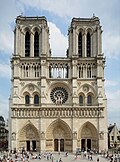 Notre-Dame de Paris
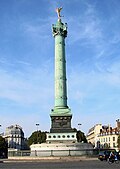 July Column
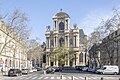 Saint-Gervais-Saint-Protais
 pont Saint-Louis
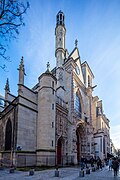 Saint-Merri
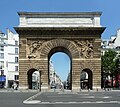 Porte Saint-Martin
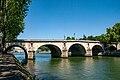 Pont Marie
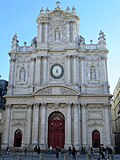 church Saint-Paul-Saint-Louis of Paris
Notre-Dame de Paris, often referred to simply as Notre-Dame, is a medieval Catholic cathedral on the Île de la Cité, in the 4th arrondissement of Paris, France. It is the cathedral church of the Roman Catholic Archdiocese of Paris. Wikipedia · CC BY-SA
The July Column is a monumental column in Paris commemorating the Revolution of 1830. It stands in the center of the Place de la Bastille and celebrates the Trois Glorieuses — the 'three glorious' days of 27–29 July 1830 that saw the fall of Charles X, King of France, and the commencement of the Jul… Wikipedia · CC BY-SA
Museums & galleries
- 🖼️Galerie Menouar
- 🏛️Exhibition: Révéler le féminin. Mode et Apparences au XVIIIe siècle
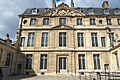 Musée Picasso
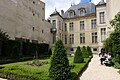 Musée Cognacq-Jay
- 🏛️Everything in Order
- 🖼️Florence Loewy
- 🖼️Martine Aboucaya
- 🖼️Sit Down
Musée Picasso Paris (French: [myze pikaso]; English: Paris Picasso Museum) is an art gallery located in the Hôtel Salé (English: Salé Hall) on the Rue de Thorigny, in the Marais district of Paris, France, dedicated to the work of the Spanish artist Pablo Picasso (1881–1973). Wikipedia · CC BY-SA
The Musée Cognacq-Jay (French: [myze kɔɲakʒɛ]; English: Cognacq-Jay Museum) is an art museum located in the Hôtel de Donon (or Hôtel Donon) in the 3rd arrondissement of Paris, France. Wikipedia · CC BY-SA
Restaurants in Le Marais
- 🍽️Le Petit Dakar
- 🍽️Glou
- 🍽️Suzette
- 🍽️Robert et Louise
- 🍽️Nobisan
- 🍽️Café des Musées
- 🍽️Salōn Marais
- 🍽️Ogata
- 🍽️Mai Thai
- 🍽️Delicious
Delicious (French: Délicieux) is a 2021 French/Belgian comedy-drama film directed by Éric Besnard. The film was nominated for two categories at the 47th César Awards, Best Costume Design and Best Production Design. Wikipedia · CC BY-SA
Bars in Le Marais
- 🍸The Cambridge public house
- 🍸Le Yono
- 🍸Biglove - Big Mamma
- 🍸Hôtel Cour Des Vosges
- 🍸One Way
- 🍸Hôtel Dupond-Smith
- 🍸Le Bistrot de la Place
- 🍸Fat.
- 🍸Lucky Bastard
- 🍸Hôtel Pavillon De La Reine
Cafés in Le Marais
- ☕Fika
- ☕Le Saint-Gervais
- ☕T'Cup
- ☕Hanoi Corner
- ☕Le Loir dans la Théière
- ☕Boot Café
- ☕Pontochoux Café
- ☕Griffon
- ☕Notre café
- ☕Chez Alain Miam Miam
Pâtisseries in Le Marais
- 🧁Méert
- 🧁Copains Rosiers
- 🧁Yann Couvreur Pâtisserie
- 🧁Guzao
- 🧁Brach pâtisserie par Yann Bris
- 🧁Pierre Marcolini
- 🧁Pierre Hermé
- 🧁Valrhona
Bookshops
- 📚Smith&Son
- 📚Perrotin
- 📚Libraire de la Maison européenne de la Photographie
- 📚Yvon Lambert
- 📚Librairie Michèle Ignazi
- 📚Paris Design Week: Olfactory Installation in Victor Hugo's House Garden
Cinemas, theatres & live music
- 🎤Cultural season at the Bibliothèque historique de la Ville de Paris
- 🎬Marilyn. Portrait of a Radiant Child
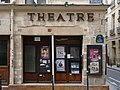 Théâtre des Blancs-Manteaux
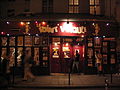 théâtre du Point-Virgule
- 🎭Hello with Markobi at Théâtre Le Double Fond
- 🎭A Magic Cocktail with Maxence Vire at Théâtre Le Double Fond
- 🎭Théâtre du Petit Monde
- 🎤Blues Jam Session at 38Riv, hosted by Lemmy’s Tribe
Markets & delis
- 🥘Caractère de Cochon
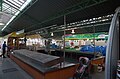 Marché des Enfants Rouges
- 🥘Apertivus
- 🥘Famille Mary
- 🥘Izraël
- 🧺La Buvette du Climat Returns with Yes We Camp
The Marché des Enfants Rouges is the oldest covered market in Paris, France. It was established in 1628 as the "petit marché du Marais" and is located at 39 Rue de Bretagne in the Marais (3rd) arrondissement. The market has been listed as a historic monument since 1982. Wikipedia · CC BY-SA
Parks & gardens
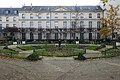 square Georges-Cain
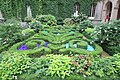 jardin du Musée Carnavalet
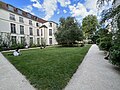 jardin des Rosiers – Joseph-Migneret
- 🌷Square Priou - Valjean
- 🌷Jardin des Arts - Albert Schweitzer
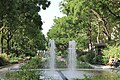 Promenade Richard Lenoir Square Richard Lenoir
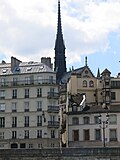 Parc des Rives de Seine
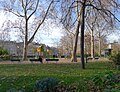 square Henri-Galli
The Rosiers–Joseph Migneret Garden is a green space located in the 4th arrondissement of Paris. Wikipedia · CC BY-SA
Where the street names come from
- promenade Alain Devaquet — Alain Devaquet, born Alain, Jean, Pierre Devaquet (Raon-l'Etape, 1942 - Villejuif, 2018), chemist and politician. Mayor of the 11th arrondissement of Paris from 1983 to 1995.
- place Albert Memmi — Albert Memmi (Tunis, 1920 - Paris, 2020), writer, academic and essayist.
- passage Alombert — Mr Alombert, owner.
- rue Alphonse Baudin — Alphonse Baudin (Nantua, 1811-Paris, 1851), French physician and politician, killed on a barricade in the Faubourg Saint-Antoine on 3 December 1851.
- impasse Amelot — Near the rue Amelot. Amelot was, in 1777, minister and secretary of State for the department of Paris.
- rue Amelot — Amelot was, in 1777, minister and secretary of State for the department of Paris.
- allée Arnaud Beltrame — Arnaud Beltrame (Étampes, 1973 - Carcassonne, 2018), French senior gendarmerie officer, known for having voluntarily taken the place of a hostage during the terrorist attack of 23 March 2018 in Trèbes and for having died of the wounds received during that event. Commandeur de la Légion d'honneur with citation in the Order of the Nation, awarded posthumously. Holder of numerous decorations.
- rue au Maire — The seat of the jurisdiction of the mayor or bailiff of Saint-Martin des Champs stood on this street.
- rue Aubriot — Hugues Aubriot, provost of Paris under Charles V, died in 1382.
- rue Aubry le Boucher — Named after a butcher called Aubry.
- rue aux Ours — A corruption of the word Oues (geese in old French): there were a great many roasting houses on this street.
- rue Bailly — Bailiwick of Saint-Martin des Champs.
- rue Barbette — Opened on the site of the former Hôtel Barbette.
- passage Barrois — Mr Barrois, owner of the land on which the street was opened.
- place Baudoyer — This street owes its name to a former city gate, on the site of which it was created.
- impasse Beaubourg — Near rue Beaubourg.
- rue Beaubourg — Former village of Beau-Bourg, so called from the 11th century.
- boulevard Beaumarchais — Pierre Augustin Caron de Beaumarchais (1732-1799), French writer and playwright; his mansion stood at the corner of boulevard Richard Lenoir and boulevard Beaumarchais.
- rue Beautreillis — Opened on the site of the Hôtel de Beautreillis, which owed its name to the trellises in the gardens of the Hôtel Saint-Paul.
- rue Béranger — Jean Pierre de Béranger (1780-1857), French songwriter; died at no. 5 in this street.
- cour Bérard — Mr Bérard, owner.
- rue Bernard de Clairvaux — Bernard of Clairvaux (saint), first abbot of Clairvaux Abbey; one of the leading figures of the Christian West. In memory of the former impasse de Clairvaux, which disappeared during the renovation of the district.
- place Bernard Lazare — Bernard Lazare (Nîmes, 1865-Paris, 1903), writer and journalist. He campaigned for the creation of a Jewish nation in Palestine.
- impasse Berthaud — A certain Berthaud ran a real tennis court in the district at the end of the 16th century.
- rue Borda — Jean Charles Borda (1733-1799), mathematician and physicist; near the Conservatoire des Arts et Métiers.
- rue Boulle — André Charles Boulle (1642-1732), French cabinetmaker and engraver; furniture-makers' district.
- passage Brantôme — Near the rue Brantôme.
- rue Brantôme — Pierre de Bourdeille, abbot and lord of Brantôme (Bourdeille, 1540-Bourdeille, 1614), French writer; close to the former rue Brantôme.
- rue Bréguet — Abraham Louis Bréguet (1747-1823), French watchmaker of Swiss origin born in Neuchâtel; industrial area.
- rue Brisemiche — This street owes its name to the loaves that were distributed to the canons of the collegiate church of Saint-Merri.
- rue Caffarelli — Louis Marie Joseph Maximilien Caffarelli (1756-1799), general of engineers, killed at the siege of Saint-Jean d'Acre.
- rue Caron — Caron, master general of the buildings of King Louis XVI and of the Ponts et Chaussées, author of the first design for the Sainte-Catherine market, opened in 1770 on the site of the priory of Sainte-Catherine du Val des Ecoliers.
- rue Castex — Pierre Castex (1760-1805), colonel of the 13th light infantry regiment, killed at the battle of Austerlitz; near the pont d'Austerlitz.
- rue Chapon — Called in the 13th century "vicus Roberti Begonis, sive Caponis", after the name of one of its residents.
- passage Charlemagne — Near the Lycée Charlemagne.
- rue Charlemagne — Near the Lycée Charlemagne.
- rue Charles Luizet — Charles Luizet (1903-1947), eminent civil servant. Prefect of Police at the time of the liberation of Paris; Governor General of French Equatorial Africa (AEF) in 1947.
- rue Charles V — Charles V, King of France (1337-1380), near the Hôtel Saint-Paul, created by this sovereign.
- rue Charles-François Dupuis — Charles François Dupuis (Trye-Château (Oise), 1742-Is-sur-Tille (Côte d'Or), 1809), French philosopher and politician. Author of "L'origine de tous les cultes ou religion universelle".
- rue Charlot — Claude Charlot had several houses built there in the 17th century.
- promenade Claire Lacombe — Claire Lacombe (1765, Pamiers (Ardèche)), actress, revolutionary and feminist activist.
- rue Cloche Perce — Most probably a sign made of a blue bell (cloche perse).
- rue Clotilde de Vaux — Clotilde de Vaux (1815-1846), "inspiration" of Auguste Comte, in whose memory the Temple of the Religion of Humanity was created in rue Payenne.
- rue Commines — Philippe de Commines (1445-1509), chamberlain to King Louis XI, statesman and historian.
- rue Conté — Nicolas Jacques Conté (1755-1805), chemist and engineer, founder of the Conservatoire des Arts et Métiers; near that establishment.
- quai d'Anjou — The Duke of Anjou, brother of Louis XIII.
- rue d'Ormesson — Henri François Le Fèvre d'Ormesson (1751-1807), councillor of State, was comptroller of finances when this street was opened for the creation of the Sainte-Catherine market.
- cour Damoye — Mr Damoye, landowner.
- rue Daval — Antoine François Daval, alderman from 1777 to 1779.
- rue de Béarn — So named in honour of Henri IV, the Béarnais; near place Royale, today place des Vosges.
- rue de Beauce — Region of the Paris Basin; near place de France, planned by Henri IV.
- rue de Birague — René de Birague (1507-1583), cardinal and Chancellor of France; near the site of the fountain he had completed and to which he had given his name.
- quai de Bourbon — This quay owes its name to the royal family of Bourbon.
- rue de Braque — The de Braque family lived on this street in the 14th century.
- rue de Bretagne — Province of France; near the place de France, planned by Henri IV.
- rue de Brosse — Salomon de Brosse, wrongly called Jacques de Brosse (died in 1626), architect of the Palais du Luxembourg and of the portal of the church of Saint-Gervais; near that church.
- cité de Crussol — Near the rue de Crussol.
- rue de Crussol — Alexandre Charles Emmanuel, Chevalier de Crussol (1743-1815), appointed administrator general of the Grand Priory of France. He was bailiff of the Temple when the oldest section of the street was opened.
- rue de Fourcy — Henri de Fourcy, whose mansion stood nearby, was provost of the merchants when the street was cut through (around 1690).
- rue de Franche Comté — Several streets in this district were given the names of former French provinces.
- rue de Jarente — Opened in 1784 on the site of the priory of la Couture Sainte-Catherine, it was given the name of Louis François Alexandre de Jarente, commendatory prior.
- rue de Jouy — The abbé de Jouy owned a mansion in this street in the 13th century.
- rue de l'Abbé Migne — Abbé Jacques Paul Migne (Saint-Flour, 1800-Paris, 1875), French cleric and publisher.
- rue de l'Ave Maria — Convent of the Ave Maria, abolished in 1790.
- passage de l'Horloge à Automates — Near the monumental automaton clock installed by Jacques Monestier.
- impasse de l'Hôtel d'Argenson — Near the former Hôtel d'Argenson.
- port de l'Hôtel de Ville — Near the quai de l'Hôtel de Ville.
- quai de l'Hôtel de Ville — Runs alongside the Hôtel de Ville.
- rue de l'Hôtel de Ville — Near the Hôtel de Ville.
- place de l'Hôtel de Ville-esplanade de la Libération — Named in commemoration of the Liberation of Paris during the Second World War.
- rue de l'Hôtel Saint-Paul — Near the former Hôtel Saint-Paul.
- place de la Bastille — Square created on the site of the Bastille fortress, built in 1369 and captured on 14 July 1789.
- rue de la Bastille — Near place de la Bastille.
- rue de la Cerisaie — Avenue of cherry trees in the gardens of the Hôtel Saint-Paul.
- rue de la Corderie — Former ropewalks.
- rue de la Coutellerie — Cutlers established themselves there during the reign of Henri II.
- rue de la Perle — Sign of a former real tennis court.
- impasse de la Poissonnerie — Near the fish market of the Sainte-Catherine market.
- rue de la Verrerie — Probably due to a gathering of glassmakers in the area in the Middle Ages.
- rue de Lesdiguières — Former mansion of the Constable of Lesdiguières (1543-1626).
- rue de Lobau — Georges Mouton, Count of Lobau (1770-1838), Marshal of France.
- rue de Malte — The Count of Artois was grand prior of the Temple (Order of Malta) when this street was opened on the grounds of the Grand Priory (1780).
- rue de Montmorency — The lords of Montmorency had their mansion on this street in the 13th and 14th centuries.
- rue de Moussy — Jean de Moussy was an alderman in 1530.
- rue de Normandie — Province of France; near the place de France planned by Henri IV.
- rue de Picardie — French province; near the place de France planned by Henri IV.
- rue de Poitou — Province of France; near the place de France planned by Henri IV.
- cour de Rome — Near the former impasse de Rome, absorbed into the rue au Maire around 1833.
- rue de Saintonge — Province of France; adjoining the place de France planned by Henri IV.
- place de Thorigny — Near the rue de Thorigny.
- rue de Thorigny — The hôtel de Thorigny stood nearby.
- rue de Turbigo — Victory won over the Austrians on 2 June 1859.
- rue de Turenne — Henri de La Tour d'Auvergne, vicomte de Turenne (1611-1675), Marshal General, had his mansion in this street.
- rue de Venise — The sign of the "Ecu de Venise".
- rue Debelleyme — Louis Marie Debelleyme (1787-1862), magistrate and prefect of police, lived in this district for a long time.
- parvis des 260 enfants — 260 children, in tribute to the two hundred and sixty children deported from the school of the Hospitalières Saint Gervais during the Vel d'Hiv roundup in 1942.
- rue des Archives — This street runs alongside the buildings of the Archives nationales.
- rue des Arquebusiers — Near the former garden of the Arquebusiers laid out in the moats of the City.
- rue des Barres — This street owes its name, as does the mansion built here around 1260, to the mills situated on the river, at the place known as les Barres.
- rue des Blancs Manteaux — The church of the Blancs Manteaux stands on this street.
- port des Célestins — Célestins convent founded in 1352.
- quai des Célestins — Célestins convent founded in 1352.
- place des Combattantes et Combattants du sida — in tribute to those who have died of and are living with HIV/AIDS. Also recalling the struggle of care staff, support workers and activists engaged in the fight against HIV/AIDS.
- rue des Coutures Saint-Gervais — Opened on the couture, or cultivated land, of Saint-Gervais.
- rue des Deux Ponts — Links the pont Marie to the pont de la Tournelle.
- passage des Eaux Vives — Presence of a basin in the middle of this passage. The businesses along it are essentially devoted to sanitary ware.
- rue des Écouffes — A particular trade or shop sign, the word écouffe meaning both a fabric and a bird of prey.
- place des Émeutes de Stonewall — on the occasion of the 50th anniversary of a series of rebellions which began on the night of 27 to 28 June 1969 against a police operation at the Stonewall Inn, a gay bar in Greenwich Village (New York).
- boulevard des Filles du Calvaire — The convent of the Filles du Calvaire stood here.
- rue des Filles du Calvaire — The convent of the Filles du Calvaire stood here.
- rue des Fontaines du Temple — The course of the waters of Savies which, after serving the Temple, flowed into the fontaine du Vertbois at the priory of Saint-Martin des Champs.
- rue des Francs Bourgeois — An almshouse intended to take in townspeople exempt from taxes on account of their poverty (on the site of nos. 32-36).
- passage des Gravilliers — Near the rue des Gravilliers.
- rue des Gravilliers — It was probably inhabited in the 13th century by gravilliers (workers who prepared gravelled ash by incinerating vinegar lees).
- rue des Guillemites — The part of the street since removed had been laid out on the gardens of the Guillemite friars, known as the Blancs Manteaux.
- rue des Haudriettes — Community of widowed women, known as Haudriettes because their house had been founded by Etienne Haudri, chief pantler to Philippe le Bel; they owned various properties there.
- rue des Hospitalières Saint-Gervais — Convent of the hospitaller nuns of Saint-Gervais, on the site of which this street was laid out.
- rue des Jardins Saint-Paul — The oldest part of this street was opened in the 13th century on gardens adjoining the city wall of Paris.
- rue des Juges Consuls — The consular judges sat for 300 years in this very street, which was the cradle of the Commercial Court.
- allée des Justes parmi les Nations — In tribute to the memory of the Righteous who, during the 39-45 war, helped or hid Jewish men, women and children hunted by the Nazis. It takes up the exact distinction that honours those whose names are engraved on the Mur des Justes.
- rue des Lions Saint-Paul — Opened on the site of part of the gardens of the Hôtel Saint-Paul, where the king's lions were kept.
- rue des Mauvais Garçons — Formerly inhabited by an unruly population.
- passage des Ménétriers — Name taken from that of the Chapelle Saint-Julien des Ménétriers, which stood in the district (opposite the former no. 170 rue Saint-Martin) from the 14th to the 18th century.
- rue des Minimes — Runs alongside the former Minimes convent, converted into a barracks.
- rue des Nonnains d'Hyères — The Benedictine nuns of the abbey of Yerres (Essonne) had a house here, acquired in 1182. A corruption of that name.
- rue des Oiseaux — From a shop sign.
- impasse des Primevères — This street was once lined with gardens.
- rue des Quatre Fils — A former shop sign: "Aux Quatre Fils Aymon".
- passage des Singes — Opens onto the former rue des Singes, now merged with the rue des Guillemites.
- rue des Tournelles — Ran alongside the palais des Tournelles.
- place des Vosges — Given in Year VIII because the Vosges department had been the first to pay its taxes in full.
- place du Bataillon Français de L'O.N.U. en Corée — Battalion created by the French government on 24 August 1950. It was made up of volunteers, almost all of them veterans of the 1939-1945 war or of the Indochina war, who distinguished themselves during the Korean War (1951-1953).
- impasse du Boeuf — Former shop sign.
- rue du Bourg Tibourg — Main street of the former bourg Tibout or Thibault.
- rue du Cloître Saint-Merri — Formerly crossed the cloister of the church of Saint-Merri.
- passage du Commerce Saint-Martin — Near the rue Saint-Martin.
- cour du Coq — Nickname of an owner.
- rue du Fauconnier — So called from the 13th century onwards.
- rue du Figuier — There was once a remarkable fig tree in this street.
- rue du Foin — A street laid out at the end of the 16th century across a meadow that formed part of the parc des Tournelles.
- rue du Forez — The province of Forez; near the place de France planned by Henri IV.
- rue du Grand Prieuré — Laid out in 1783 on land belonging to the Grand Priory of the Temple.
- rue du Grenier Saint-Lazare — Corruption of Garnier or Guernier de Saint-Ladre, the name of a family that lived there at the end of the 13th century.
- passage du Jeu de Boules — Owing to a former boules ground.
- rue du Marché des Blancs Manteaux — Runs along the south side of the former marché des Blancs Manteaux.
- place du Marché Sainte-Catherine — Market established on the site of the former priory of Sainte-Catherine du Val des Écoliers.
- passage du Maure — In memory of the former rue du Maure, which disappeared during the redevelopment of the district.
- rue du Parc Royal — Near the park of the royal hôtel des Tournelles.
- rue du Pas de la Mule — Uncertain origin; perhaps the name of a narrow passage leading off the place Royale.
- rue du Pasteur Wagner — Charles Wagner (1852-1918), French pastor.
- rue du Perche — Former province of France; near the place de France planned by Henri IV.
- rue du Petit Musc — Corruption of Pute y Musse, a name given because of the population living there.
- rue du Plâtre — Plaster was fired on this spot in the 13th century.
- rue du Pont aux Choux — From a bridge over a ditch of the town, in the middle of market gardens.
- rue du Pont Louis-Philippe — Leads to the pont Louis-Philippe.
- rue du Prévôt — Near a former mansion known as the hôtel du Prévôt.
- rue du Renard — Former shop sign.
- rue du Roi de Sicile — Named after the mansion of Charles, comte d'Anjou et de Provence, brother of Saint Louis, proclaimed king of Naples and Sicily in 1266.
- rue du Roi Doré — The gilded bust of Louis XIII stood at one end of it.
- boulevard du Temple — Near the Commanderie du Temple.
- rue du Temple — Led to the Commandery of the Temple.
- rue du Trésor — The laying out of this street on the site of the Hôtel d'Effiat led to the discovery of coins of the 14th and 15th centuries.
- cité Dupetit-Thouars — Near the rue Dupetit-Thouars.
- rue Dupetit-Thouars — Aristide Aubert Dupetit-Thouars (1760-1798), French captain of the ship "Le Tonnant", on which he died heroically; or, according to La Tynna, Louis Marie Aubert Dupetit-Thouars (1758-1831), French botanist, director of the Pépinière du Roi at the time the street was opened.
- place Edmond Michelet — Edmond Michelet (1899-Brive, 1970), French Christian activist and statesman; a member of the Resistance from the very first hour.
- rue Eginhard — Eginhard (771-844), historian of Charlemagne; in the vicinity of the lycée Charlemagne.
- place Élisabeth Dmitrieff — Elisavieta Loukinitcha Koucheleva, born at Volok (Russia) in 1851. Feminist and socialist militant from the very first hour. During the insurrection of 1871 (Paris Commune) she led, alongside Nathalie Lemel, the "Union des femmes pour la Défense de Paris et les soins aux blessés". All trace of her was lost in 1918, a few weeks after the revolution.
- parvis Élise et Célestin Freinet — Élise Freinet, born Élise Lagier-Bruno (Pelvoux, 1898 - Vence, 1983), committed educationalist, wife of Célestin Freinet. Célestin Freinet, born Célestin Baptistin Freinet (Gars, 1896 - Vence, 1966), committed educationalist. Decorated with the Croix de guerre and the Médaille militaire.
- rue Elzévir — Family of Dutch printers (16th century); in the vicinity of the Imprimerie nationale.
- rue Eugène Spuller — Eugène Spuller (1835-1896), French lawyer, publicist and politician, member of parliament for the arrondissement.
- rue Ferdinand Duval — Emile Gustave Ferdinand Duval (1827-1896); prefect of the Seine and municipal councillor.
- rue François Miron — François Miron, provost of the merchants from 1604 to 1606; near the Hôtel de ville.
- rue Froissart — Jean Froissart (1337-1410), French chronicler.
- rue Froment — Paul-Gustave Froment, inventor of the mechanism used in the construction of electric clocks, died in 1865; industrial district.
- rue Gabriel Vicaire — Gabriel Vicaire (1848-1900), poet.
- rue Gaby Sylvia — Gabrielle Zignani, known as Gaby Sylvia (Cesena, Italy, 1920-Chamalières, 1980). French dancer and actress of Italian origin.
- rue Geoffroy l'Angevin — Probably after the name of a notable resident. This name existed in the 13th century.
- rue Geoffroy l'Asnier — Corruption of Frogier l'Asnier.
- place Georges Pompidou — Georges Pompidou (Montboudif, 1911-Paris, 1974), French statesman, President of the Republic from 1969 until his death.
- rue Grenier sur l'Eau — Inhabited in the 13th century by a man named Garnier; near the Seine.
- impasse Guéménée — This lane served as a service access to the Hôtel Guéménée.
- place Harvey Milk — Harvey Milk, born Harvey Bernard Milk (Woodmere, New York State (United States), 1930 - San Francisco (United States), 1978), San Francisco city councillor assassinated during his term of office. First openly gay American politician.
- boulevard Henri IV — Henri IV, King of France (1553-1610); near the Arsenal, residence of Sully.
- place Igor Stravinsky — Igor Féodorovitch Stravinsky (Orianienbaum, 1882-New York, 1971), composer of Russian origin, naturalised French and then American.
- rue Jacques Coeur — Jacques Coeur (1395-1456), treasurer to Charles VII; near the former Hôtel Saint-Paul.
- impasse Jean Beausire — Near the rue Jean Beausire; a family of notable bourgeois, one of whose descendants, who died in 1743, was master of works and comptroller general of the City's buildings. No relation to the Beausire family of architects, active in Paris in the 17th and 18th centuries.
- passage Jean Beausire — Near the rue Jean Beausire; a family of notable bourgeois, one of whose descendants, who died in 1743, was master of works and comptroller general of the City's buildings. No relation to the Beausire family of architects, active in Paris in the 17th and 18th centuries.
- rue Jean Beausire — A family of notable bourgeois, one of whose descendants, who died in 1743, was master of works and comptroller general of the City's buildings. No relation to the Beausire family of architects, active in Paris in the 17th and 18th centuries.
- rue Jean du Bellay — Jean du Bellay (1492-1560), cardinal, bishop of Paris; near Notre-Dame.
- rue Jules Cousin — Jules Cousin (1830-1899), founder of the musée Carnavalet; in the vicinity of the bibliothèque de l'Arsenal, of which he was librarian.
- place Louis Aragon — Louis Aragon (Neuilly-sur-Seine, 1897-Paris, 1982), poet and novelist, known for his commitment to the communist party and his part in the Resistance alongside his wife Elsa Triolet.
- pont Louis-Philippe — The original bridge was built during the reign of Louis-Philippe.
- rue Madame de Sévigné — Marie de Rabutin-Chantal, marquise de Sévigné (1626-1696), made famous by her letters, lived from 1677 until her death in the Hôtel Carnavalet, situated on this street and today occupied by the historical museum of the City of Paris.
- rue Malher — Second lieutenant Malher, of the 18th light infantry, killed on 24 June 1848 on the barricades.
- rue Marcel Gromaire — Marcel Gromaire (Noyelles-sur-Sambre, 1892-Paris, 1971), French painter, draughtsman, engraver and designer of tapestry cartoons.
- place Marguerite Porete — Marguerite Porete (probably county of Hainaut, around 1250 - Paris, 1310), author of the Miroir des simples âmes, burned alive on the place de Grève.
- pont Marie — Built in 1635 under letters patent of 6 May 1614 by Sieur Marie, contractor.
- place Marie-Claude Vaillant-Couturier et Pierre Villon — Marie-Claude Vaillant-Couturier, born Vogel (Paris, 1912-Villejuif, 1996), photo-reporter. Honorary president of the Foundation for the Memory of the Deportation, holder of the title of Volunteer Combatant of the Resistance. She was raised to the rank of Commander of the Legion of Honour in 1995. Pierre Villon, born Roger Salomon Ginsburger (Soultz (Haut-Rhin), 1901 - Vallauris (Alpes-Maritimes…
- rue Michel Blanc — Michel Blanc (Courbevoie, 1952 – Paris, 2024), French actor, director, screenwriter and dialogue writer.
- rue Michel le Comte — It dates from the 13th century.
- rue Milo Adoner — Milo Adoner (Paris, 1925 – Paris, 2020), survivor of deportation, witness of the Shoah.
- passage Molière — Near the former théâtre Molière.
- place Monique Antoine — Monique Marguerite Antoine (Paris, 1933-Paris, 2015), lawyer and feminist campaigner. Co-founder of the Mouvement pour la Liberté de l'avortement et de la contraception (MLAC).
- rue Montgolfier — Joseph Michel Montgolfier (1740-1810) and his brother Jacques Etienne (1745-1799), French inventors of the balloon; near the Conservatoire des Arts et Métiers.
- rue Moufle — Mr Moufle, landowner, mayor of the former 8th arrondissement.
- place Nathalie Lemel — Nathalie Lemel (Brest, 1826-Ivry-sur Seine, 1921), an early socialist campaigner and feminist alongside Elisabeth Dmitrieff during the uprising of 1871 (the Paris Commune).
- rue Necker — Opened when the marché Sainte-Catherine was created, during the ministry of Jacques Necker (1732-1804).
- rue Nicolas Appert — Nicolas Appert (Châlons-sur-Marne, 1752-Massy, 1841), French manufacturer, inventor of a process for preserving food by heat.
- cité Noël — Mr Noël, founder of the estate.
- place Olympe de Gouges — Marie Gouze, known as Olympe de Gouges (Montauban, 1748-Paris, 1793), woman of letters and pioneer of feminism.
- place Ovida Delect — Ovida Delect (Caen (Calvados), 1926 - Coutances (Manche), 1996), member of the Resistance and deportee, poet and communist activist, declared male at birth under the name Jean-Pierre, Henri, Bernard Voidies.
- place Pan Yuliang — Pan Yuliang (Yangzhou (China), circa 1895 – Paris, 1977), Chinese painter, sculptor and engraver.
- place Pasdeloup — Jules Etienne Pasdeloup (1819-1881), French composer, founder of the popular concerts.
- rue Pastourelle — Roger Pastourelle lived here in the 14th century.
- place Patrice Chéreau — Patrice Chéreau (Lézigné (Maine et Loire), 1944 - Clichy-la-Garenne (Hauts-de-Seine), 2013), man of theatre, opera and cinema.
- rue Paul Dubois — Paul Dubois (1829-1905), sculptor.
- allée Pauline Léon — Pauline Léon (1768, Paris-1838), revolutionary and feminist activist.
- rue Pavée — This was one of the first paved streets in the district.
- rue Payenne — Probably due to a former owner named Payen.
- rue Pecquay — Jean Delahaye, known as Piquet, owned a house there.
- rue Pelée — Name of an owner.
- rue Perrée — Jean Baptiste Emmanuel Perrée (1761-1800), rear admiral.
- rue Pierre au Lard — Corruption of Pierre Oilart, the name of a prominent burgher who lived in this street in the 13th century.
- place Pierre Kauffmann — Pierre Kauffmann, born Pierre Elie Kauffmann (Strasbourg, 1920 - Paris, 2013), Resistance fighter and former director of the Representative Council of French Jewish Institutions (CRIF). Director and vice-president of the Protection Service of the Jewish Community. Commander of the Légion d'honneur.
- rue Pierre Seel — Pierre Seel, born Pierre Georges Seel (Haguenau (Bas-Rhin), 1923 - Toulouse (Haute-Garonne), 2005), deportee and campaigner for the homosexual cause.
- rue Portefoin — The mansion of one Jean Portefin stood here.
- rue Quincampoix — An old name (13th century), thought to be that of a private individual.
- rue Rambuteau — Laid out under the administration of Claude Philibert Barthelot, Count of Rambuteau (1781-1869), prefect of the Seine.
- rue Rampon — Count Antoine Guillaume Rampon (1759-1842), divisional general.
- place Renée Vivien — Pauline Mary Tarn (London (England), 1877-Paris, 1909), poet of the Parnassian movement of the Belle Epoque, under the name Renée Vivien.
- boulevard Richard Lenoir — François Richard (1765-1839), cloth manufacturer. On the death of his partner, Joseph Lenoir-Dufresne (1768-1806), he partly adopted his name in memory of the firm they had run together and thereafter called himself François Richard-Lenoir; a district of factories.
- esplanade Roger Joseph Boscovich — Roger Joseph Boscovich (Raguse (Dubrovnik), 1711-Milan, 1787), Croatian philosopher, a symbol of the Age of Enlightenment.
- place Roger Priou-Valjean — Roger Priou-Valjean (1912-1999), former municipal councillor and former general councillor of the Seine. A great Resistance figure, elected representative of the 4th arrondissement from the Liberation until 1959, Officer of the Légion d'Honneur, Croix de guerre 1939-1945, medal of the Resistance with rosette.
- rue Roger Verlomme — Roger Verlomme (1890-1950), Prefect of the Seine.
- rue Saint-Antoine — Led to the abbey of Saint-Antoine, converted into a hospital in 1790.
- rue Saint-Bon — The former chapel of Saint-Bon stood on this street.
- impasse Saint-Claude — Near the rue Saint-Claude.
- rue Saint-Claude — Former shop sign of the image of Saint-Claude (17th century).
- impasse Saint-Fiacre — Former shop sign.
- place Saint-Gervais — Square located opposite the church of Saint-Gervais.
- rue Saint-Gilles — Shop sign of Saint-Gilles.
- rue Saint-Louis en l'Île — Crosses the île Saint-Louis, so named because it was covered with buildings during the reign of Louis XIII.
- rue Saint-Martin — Owes its name to the former priory of Saint-Martin des Champs, today the Conservatoire des Arts et Métiers.
- rue Saint-Merri — Near the church of Saint-Merri.
- passage Saint-Paul — Near the rue and the church of Saint-Paul.
- rue Saint-Paul — The former church of Saint-Paul stood on this street.
- passage Saint-Pierre Amelot — Begins on the rue Amelot, formerly the rue Saint-Pierre Popincourt.
- passage Saint-Sabin — Near the rue Saint-Sabin.
- rue Saint-Sabin — Charles Pierre Angelenne de Saint-Sabin was an alderman of the City of Paris when the line of this street was straightened in 1777.
- impasse Saint-Sébastien — Near the rue Saint-Sébastien.
- passage Saint-Sébastien — Near the rue Saint-Sébastien.
- rue Saint-Sébastien — Former shop sign.
- rue Sainte-Anastase — Near the convent of the hospitaller nuns of Sainte-Anastase, commonly called the hospitallers of Saint-Gervais.
- passage Sainte-Avoie — Near the former rue Sainte-Avoie, now merged into the rue du Temple, in which stood the convent of the nuns of Sainte-Avoie, or Hedwige.
- rue Sainte-Croix de la Bretonnerie — Community of the canons of Sainte-Croix, known as those of la Bretonnerie because they settled in the 13th century on this street, called la Bretonnerie or the champ aux Bretons.
- square Sainte-Croix de la Bretonnerie — Near the rue Sainte-Croix de la Bretonnerie. Community of the canons of Sainte-Croix, known as those of la Bretonnerie because they settled in the 13th century on this street, called la Bretonnerie or the champ aux Bretons.
- passage Sainte-Élisabeth — Runs alongside the church of Sainte-Elisabeth.
- rue Sainte-Élisabeth — Near the church of Sainte-Elisabeth.
- passage Salarnier — Mr. Salarnier, property owner.
- rue Scarron — Paul Scarron (Paris, 1610-Paris, 1660), French writer.
- place Shimon Peres — Shimon Peres (Wiszniew (Poland), 1923 - Ramat Gan (Israel), 2016), Israeli statesman. President of the State of Israel, Nobel Peace Prize 1994 with Yitzhak Rabin and Yasser Arafat.
- rue Simon Le Franc — Perhaps due to Simon Franque, a notable burgher who lived in the 12th century.
- ruelle Sourdis — Ran alongside the former Hôtel de Sourdis.
- place Theodor Herzl — Theodor Herzl (Budapest, Hungary, 1860 - Edlach, Austria, 1904). Originator of the idea of a sovereign Jewish state, the State of Israel.
- rue Tiron — This street owes its name to a house belonging to the abbey of Tiron.
- passage Vendôme — This passage opens onto rue Béranger, formerly rue de Vendôme, laid out on the grounds of the Temple and so named in honour of the Duke of Vendôme, Grand Prior of France.
- allée Verte — Near rue du chemin Vert, formerly rue Verte.
- rue Vieille du Temple — An old road that led to the Commandery of the Temple.
- rue Villehardouin — Geoffroi, lord of Villehardouin, 12th-century chronicler; near the former rue Saint-Louis, today rue de Turenne.
- rue Volta — Alessandro Volta (1745-1827), Italian physicist, inventor of the electric battery that bears his name; near the Conservatoire des Arts et Métiers.
- passage Walter Benjamin — Walter Benjamin, born Walter Bendix Schönflies (Berlin, Germany, 1892-Portbou, Spain, 1940), German philosopher and writer. Translator of Baudelaire and Proust.
Source: City of Paris, official street names (ODbL).
Real data: events from the City of Paris Open Data, places from OpenStreetMap. Availability changes continuously — open the tool to see what's open right now, around you.