Events near Invalides
- 🎫Celebrate your birthday at the musée des Plans-Reliefs (kids and adults!)
Monuments & viewpoints
 Sainte-Clotilde Church
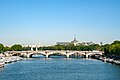 Pont de la Concorde
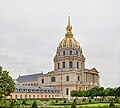 Cathédrale Saint-Louis-des-Invalides
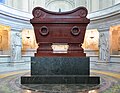 Tomb of Napoleon
 Chapelle de Jésus-Enfant
 Sphere of Human Rights
 France of the Renaissance
 France of Louis XIV
The Basilica of Saint Clotilde (Basilique Ste-Clotilde) is a basilica church located on the Rue Las Cases, in the 7th arrondissement of Paris. It was constructed between 1846 and 1856, and is the first example of a church in Paris in the neo-Gothic style. Wikipedia · CC BY-SA
The Pont de la Concorde is an arch bridge across the Seine in Paris connecting the Quai des Tuileries at the Place de la Concorde (on the Rive Droite) and the Quai d'Orsay (on the Rive Gauche). Wikipedia · CC BY-SA
Museums & galleries
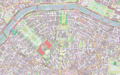
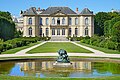
The Musée social (French pronunciation: [myze sɔsjal]) was a private French institution founded in 1894. In the early twentieth century it became an important center of research into topics such as city planning, social housing and labor organization. Wikipedia · CC BY-SA
The Musée Rodin (English: Rodin Museum) of Paris, France, is an art museum that was opened in 1919, primarily dedicated to the works of the French sculptor Auguste Rodin. Wikipedia · CC BY-SA
Restaurants in Invalides
- 🍽️Club des Poètes
- 🍽️stelle
- 🍽️Auguste
- 🍽️Café - Restaurant L'augustine
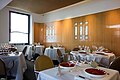 L'Arpège
- 🍽️Le Nusa
- 🍽️La Source
- 🍽️Restaurant Cléo
- 🍽️Tomy & Co
Arpège (French pronunciation: [aʁpɛʒ], Arpeggio) is a 3 Michelin-star French restaurant in Paris. The chef is Alain Passard. It was previously known as L'Archestrate by Alain Senderens. Passard bought the restaurant from Senderens in 1986. Arpège is noted for being suitable for vegetarian and vegan dining. Wikipedia · CC BY-SA
Bars in Invalides
- 🍸Hôtel J.k. Place Paris
- 🍸Hôtel Le Narcisse Blanc & Spa
- 🍸Rosa Bonheur sur Seine
Cafés in Invalides
- ☕Café du Musée
Pâtisseries in Invalides
- 🧁Copains Invalides
Where the street names come from
- quai Anatole France — Anatole François Thibault, known as Anatole France (1844-1924), French writer.
- rue Aristide Briand — Aristide Briand (1862-1932), French politician.
- rue Barbet de Jouy — Mr Barbet de Jouy, owner who gave the City the land needed to create this street.
- rue Casimir Périer — Casimir Périer (1777-1832), President of the Council of Ministers under the July Monarchy.
- rue de Bourgogne — Louis, duc de Bourgogne (1682-1712), grandson of Louis XIV.
- rue de Champagny — Jean-Baptiste Nompère de Champagny (1756-1834), Duke of Cadore, minister under Napoleon I.
- rue de Constantine — City in Algeria.
- rue de Courty — Mr Courty, owner of the land on which this street was opened.
- rue de Grenelle — Road to the former village of Grenelle, which owed its name to a rabbit warren belonging to the abbey of Sainte-Geneviève.
- rue de l'Université — Laid out partly on land that had belonged to the former University.
- rue de la Comète — Former shop sign.
- pont de la Concorde — Name chosen by the Directory to mark the reconciliation of the French after the excesses of the Terror. Near the place de la Concorde.
- port de la Concorde — Near the pont de la Concorde. Name chosen by the Directory to mark the reconciliation of the French after the excesses of the Terror.
- boulevard de La Tour-Maubourg — Marie Victor de Fay, marquis de La Tour-Maubourg (1768-1850), French general, peer of France, governor of the Invalides.
- rue de Martignac — Opened during the ministry of Jean-Baptiste Silvère Gaye, Vicomte de Martignac (1776-1832), Minister of the Interior; near the former Ministry of the Interior.
- port de Solférino — Victory won over the Austrians on 24 June 1859. Near the former Solférino bridge.
- rue de Solférino — Led to the former Solférino bridge.
- rue de Talleyrand — Opened on the property of the Prince of Sagan, Duke of Talleyrand-Périgord.
- port des Invalides — Near the pont des Invalides.
- rond-point du Bleuet de France — At the end of the First World War, two young women, Suzanne Lenhart, a nurse, and Charlotte Malterre, daughter of the Commander of the Hôtel des Invalides, moved by the suffering of the wounded, decided to come to their aid. They proposed to have fabric flowers made by the disabled men being treated at the hospital, who thus regained a taste for life. They chose the cornflower in memory of the …
- avenue du Maréchal Gallieni — Joseph Simon Gallieni (1849-1916), Marshal of France, defender of Paris in 1914.
- place du Palais Bourbon — Located in front of the Palais Bourbon, currently the seat of the National Assembly.
- place du Président Édouard Herriot — Edouard Herriot (1872-1957), French politician and writer.
- rue Fabert — Abraham Fabert (1599-1662), Marshal of France; near the Hôtel des Invalides.
- place Jacques Bainville — Jacques Bainville (1879-1936), French historian.
- rue Las Cases — Marquis Emmanuel Augustin Dieudonné Marin Joseph de Las Cases (1766-1842), French writer, chamberlain to Napoléon I; he followed him to Sainte-Hélène.
- cité Martignac — Near the rue de Martignac.
- parvis Maurice Druon — Maurice Druon (Paris, 1918-Paris, 2009), writer and politician.
- place Michel Rocard — Michel Rocard (1930-2016), former Prime Minister.
- rue Paul et Jean Lerolle — Paul Lerolle (Paris, 1846-Paris, 1912) municipal councillor from 1884 to 1898 and deputy for the 7th arrondissement of Paris from 1898 to 1912. His son, Jean Lerolle (Paris, 1873-1962), lawyer, deputy for the 7th arrondissement of Paris from 1912 to 1919 and from 1928 to 1936. They devoted much of their time to social works.
- rue Robert Esnault-Pelterie — Robert Esnault-Pelterie (1881-1957), French aviation and astronautics engineer.
- rue Saint-Dominique — Owes its name to the Dominican friars who settled there in 1631.
- place Salvador Allende — Salvador Allende (Valparaiso (Chile), 1908-Santiago (Chile), 1973). Physician, founder of the Chilean socialist party in 1933, and senator from 1945 to 1965. He was President of Chile from 1970 until his death, which occurred during the coup of 10 September.
- rue Surcouf — Robert Surcouf (1773-1827), privateer; near the Invalides.
Source: City of Paris, official street names (ODbL).
Real data: events from the City of Paris Open Data, places from OpenStreetMap. Availability changes continuously — open the tool to see what's open right now, around you.