Events near Saint-Merri
- 🎫Therapeutic discussion group for LGBTQIA+ young people aged 18–25 · Walking route
- 🏛️A seaside stroll · Walking route
- 🎤#FestivalJazzSurSeine2026: a date with Glenn Ferris “Newtet” · Walking route
- 🎤#Meeting with LE QUINT'UP · Walking route
- 🎤Béatrice Civaton - "Blooming" · Walking route
- 🎤#JamVocale / open mic with Thalie Bernard · Walking route
- 🎤#JamVocale / OpenMic by Valentin · Walking route
- 🎤Erella: four nights at the Sunside to present her album Héritages · Walking route
Monuments & viewpoints
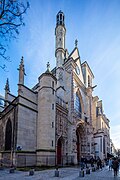 Saint-Merri
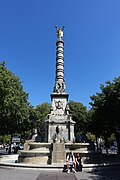 fontaine du Palmier
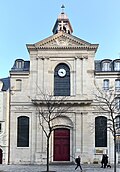 Church of Les Billettes, Paris
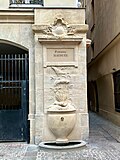 fontaine Maubuée
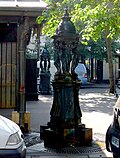 Wallace fountains on place Louis-Lépine
 Horizontal
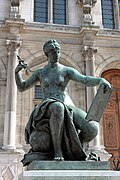 La Science - Jules Blanchard
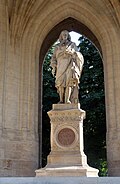 Blaise Pascal · Walking route
The Church of Saint-Merri or Église Saint-Merry) is a parish church in Paris, located near the Centre Pompidou along the rue Saint Martin, in the 4th arrondissement on the Rive Droite (Right Bank).Wikipedia · CC BY-SA
The Fontaine du Palmier (1806-1808) or Fontaine de la Victoire is a monumental fountain located in the Place du Châtelet, between the Théâtre du Châtelet and the Théâtre de la Ville, in the First Arrondissement of Paris.Wikipedia · CC BY-SA
Museums & galleries
- 🖼️Galerie Nathalie Obadia · Walking route
- 🖼️Art Génération · Walking route
- 🖼️Art Inuit Paris · Walking route
- 🏛️A seaside stroll · Walking route
Restaurants in Saint-Merri
- 🍽️Manhattan burgers
- 🍽️Crêperie Beaubourg
- 🍽️Dame Tartine
- 🍽️My fermentation · Walking route
- 🍽️Madame Guan
- 🍽️Eat Day
- 🍽️Restaurant Bayan
- 🍽️Veggie Lovers · Walking route
- 🍽️Yasoya
- 🍽️Le Céleste Gourmand
Bars in Saint-Merri
- 🍸L'Imprévu Café · Walking route
- 🍸Creed
- 🍸The Green Linnet · Walking route
- 🍸Café Cox · Walking route
- 🍸Hôtel Le Grand Mazarin · Walking route
- 🍸Tiki playa
- 🍸Le dernier bar avant la fin du monde
- 🍸Scilicet · Walking route
- 🍸L'amphi · Walking route
Cafés in Saint-Merri
- ☕Hoct&loca
- ☕Le Paradis
- ☕Café Bogato · Walking route
- ☕Le P'tit Bistrot
- ☕Bubbolitas
- ☕Isis Café
- ☕Miuko
- ☕Le Sarah Bernhardt
- ☕L'Excuse · Walking route
- ☕Le Benjamin · Walking route
Pâtisseries in Saint-Merri
- 🧁Maison Marnay · Walking route
- 🧁The French Bastards · Walking route
- 🧁Chez bogato · Walking route
- 🧁Pompette · Walking route
- 🧁Nèulo · Walking route
- 🧁Michalak · Walking route
- 🧁Bo&Mie Hotel de Ville · Walking route
- 🧁Copains Marais · Walking route
Bookshops
- 📚Book-off Châtelet · Walking route
- 📚Librairie Wallonie-Bruxelles
- 📚Librairie Chrétienne · Walking route
Cinemas, theatres & live music
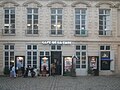 Café de la Gare
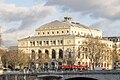 Théâtre de la Ville
- 🎭Angelin Preljocaj: Uprising · Walking route
- 🎤#FestivalJazzSurSeine2026: a date with Glenn Ferris “Newtet” · Walking route
- 🎤#Meeting with LE QUINT'UP · Walking route
- 🎤Béatrice Civaton - "Blooming" · Walking route
- 🎤#JamVocale / open mic with Thalie Bernard · Walking route
- 🎤#JamVocale / OpenMic by Valentin · Walking route
The Café de la Gare (French pronunciation: [kafe də la ɡaʁ]) is a dinner theater located at 41, rue du Temple in the 4th arrondissement of Paris, at the western end of the historic Marais district.Wikipedia · CC BY-SA
The Théâtre de la Ville (French pronunciation: [teɑtʁ d(ə) la vil]; "City Theatre") is one of the two theatres built in the 19th century by Gabriel Davioud at the request of Baron Haussmann at the Place du Châtelet, Paris, the other being the Théâtre du Châtelet.Wikipedia · CC BY-SA
Parks & gardens
Where the street names come from
- rue Adolphe Adam — Adolphe Charles Adam (1803-1856), French composer.
- place Albert Memmi — Albert Memmi (Tunis, 1920 - Paris, 2020), writer, academic and essayist.
- pont au Change — The money changers settled here in 1141, by virtue of an ordinance of Louis VII.
- rue Aubry le Boucher — Named after a butcher called Aubry.
- rue Brisemiche — This street owes its name to the loaves that were distributed to the canons of the collegiate church of Saint-Merri.
- allée Célestin Hennion — Célestin Hennion (Gommegnies (Nord), 1862-Le Havre, 1915), great reformer of the organisation of the French police. Appointed to succeed Louis Lépine as prefect of police in 1913, then in 1914, with the rank of ambassador, Commissioner General of the Government of the Republic to the Belgian Government based near Le Havre.
- rue Courtalon — Guillaume Courtalon owned two houses there in the 16th century.
- quai de Gesvres — Quay built on land granted by the king to the Marquis de Gesvres.
- place de l'Hôtel de Ville-esplanade de la Libération — Named in commemoration of the Liberation of Paris during the Second World War.
- quai de la Corse - Pasquale Paoli — French province. Pasquale Paoli (Morosaglia, 1725-London, 1807), Corsican politician, philosopher and general.
- rue de la Coutellerie — Cutlers established themselves there during the reign of Henri II.
- rue de La Reynie — Gabriel Nicolas de La Reynie (1625-1709), first lieutenant general of police.
- rue de la Tacherie — Rue de la Tacherie appears to be a corruption of rue de l'Attacherie; attachiers, or makers of clasps, lived on this street.
- rue de la Verrerie — Probably due to a gathering of glassmakers in the area in the Middle Ages.
- rue de Lobau — Georges Mouton, Count of Lobau (1770-1838), Marshal of France.
- rue de Venise — The sign of the "Ecu de Venise".
- rue des Blancs Manteaux — The church of the Blancs Manteaux stands on this street.
- allée des Défenseurs de la Caserne de la Cité — In tribute to the defenders of the Cité barracks, in the fighting from 19 to 24 August 1944.
- place des Émeutes de Stonewall — on the occasion of the 50th anniversary of a series of rebellions which began on the night of 27 to 28 June 1969 against a police operation at the Stonewall Inn, a gay bar in Greenwich Village (New York).
- rue des Juges Consuls — The consular judges sat for 300 years in this very street, which was the cradle of the Commercial Court.
- rue des Lombards — Lombard money changers were established here in the 13th century.
- impasse du Boeuf — Former shop sign.
- place du Châtelet — Laid out on the site of the Grand Châtelet, demolished in 1802.
- rue du Cloître Saint-Merri — Formerly crossed the cloister of the church of Saint-Merri.
- rue du Plâtre — Plaster was fired on this spot in the 13th century.
- rue du Renard — Former shop sign.
- place Edmond Michelet — Edmond Michelet (1899-Brive, 1970), French Christian activist and statesman; a member of the Resistance from the very first hour.
- rue Édouard Colonne — Edouard Colonne (1838-1910), conductor, founder of the concerts that bear his name.
- parvis Élise et Célestin Freinet — Élise Freinet, born Élise Lagier-Bruno (Pelvoux, 1898 - Vence, 1983), committed educationalist, wife of Célestin Freinet. Célestin Freinet, born Célestin Baptistin Freinet (Gars, 1896 - Vence, 1966), committed educationalist. Decorated with the Croix de guerre and the Médaille militaire.
- place Georges Pompidou — Georges Pompidou (Montboudif, 1911-Paris, 1974), French statesman, President of the Republic from 1969 until his death.
- place Harvey Milk — Harvey Milk, born Harvey Bernard Milk (Woodmere, New York State (United States), 1930 - San Francisco (United States), 1978), San Francisco city councillor assassinated during his term of office. First openly gay American politician.
- place Igor Stravinsky — Igor Féodorovitch Stravinsky (Orianienbaum, 1882-New York, 1971), composer of Russian origin, naturalised French and then American.
- rue Jean Lantier — Corruption of Jean Lointier; former name (13th century).
- place Marguerite Porete — Marguerite Porete (probably county of Hainaut, around 1250 - Paris, 1310), author of the Miroir des simples âmes, burned alive on the place de Grève.
- rue Nicolas Flamel — Nicolas Flamel (1330-1418), a burgher of Paris, French master scrivener and alchemist, benefactor of the former church of Saint-Jacques la Boucherie, of which the tour Saint-Jacques survives.
- allée Nijinski — Vaslav Fomitch Nijinski (Kiev, 1890-London, 1950), Russian principal dancer and choreographer of Polish origin, who was the greatest figure in male dancing of the early 20th century.
- pont Notre-Dame — Near the church of Notre-Dame.
- place Ovida Delect — Ovida Delect (Caen (Calvados), 1926 - Coutances (Manche), 1996), member of the Resistance and deportee, poet and communist activist, declared male at birth under the name Jean-Pierre, Henri, Bernard Voidies.
- rue Pernelle — Pernelle, wife of Nicolas Flamel; near the rue Nicolas Flamel.
- rue Pierre au Lard — Corruption of Pierre Oilart, the name of a prominent burgher who lived in this street in the 13th century.
- rue Quincampoix — An old name (13th century), thought to be that of a private individual.
- rue Saint-Bon — The former chapel of Saint-Bon stood on this street.
- impasse Saint-Fiacre — Former shop sign.
- rue Saint-Merri — Near the church of Saint-Merri.
- rue Sainte-Croix de la Bretonnerie — Community of the canons of Sainte-Croix, known as those of la Bretonnerie because they settled in the 13th century on this street, called la Bretonnerie or the champ aux Bretons.
- square Sainte-Croix de la Bretonnerie — Near the rue Sainte-Croix de la Bretonnerie. Community of the canons of Sainte-Croix, known as those of la Bretonnerie because they settled in the 13th century on this street, called la Bretonnerie or the champ aux Bretons.
- rue Simon Le Franc — Perhaps due to Simon Franque, a notable burgher who lived in the 12th century.
- avenue Victoria — In memory of the reception of Queen Victoria of England at the Hôtel de Ville (23 August 1855).
Source: City of Paris, official street names (ODbL).
Real data: events from the City of Paris Open Data, places from OpenStreetMap. Availability changes continuously — open the tool to see what's open right now, around you.