Events near Halles
- 🏛️Fujiko Nakaya at the Bourse de Commerce — Pinault Collection
- 🏛️Exhibition: Fashion in the Middle Ages
- 🎨Admire Them All! A tribute exhibition to Pokémon
- 🏛️Life-Size - Painting & Engraving Exhibition 59 Rivoli
- 🏛️Exhibition 'Colorful Fantasies' — Annette Weber in Paris
- 🏃Paris Sport Dimanches Estivaux: Running on the lower Quai de la Mégisserie, Paris Centre
Monuments & viewpoints
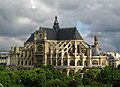 Church of Saint Eustache
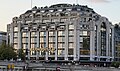 La Samaritaine
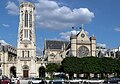 Saint-Germain l'Auxerrois
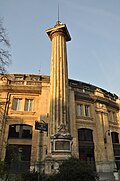 Medicis column
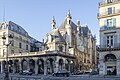 Oratoire du Louvre
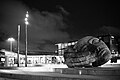 Écoute
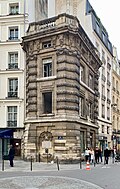 fontaine de la Croix du Trahoir
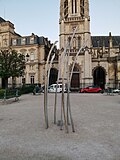 Hautes Herbes
The Church of St. Eustache, Paris (French: église Saint-Eustache, pronounced [eɡliz sɛ̃t‿østaʃ]), is a church in the 1st arrondissement of Paris. The present building was built between 1532 and 1633. Wikipedia · CC BY-SA
La Samaritaine is a large department store in the first arrondissement of Paris, France. The nearest metro station is Pont-Neuf. Established in 1870 by Ernest Cognacq, it is now owned by the luxury goods conglomerate LVMH. Wikipedia · CC BY-SA
Museums & galleries
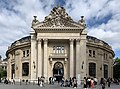 Bourse de commerce
- 🏛️Fujiko Nakaya at the Bourse de Commerce — Pinault Collection
- 🏛️Fujiko Nakaya
- 🏛️Laura Lamiel
- 🏛️The Museum in Motion
- 🏛️Exhibition: Fashion in the Middle Ages
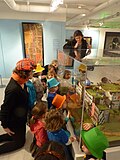 musée en herbe
- 🏛️Life-Size - Painting & Engraving Exhibition 59 Rivoli
The Bourse de commerce (Commodities Exchange) is a building in Paris, originally used as a place to negotiate the trade of grain and other commodities, and used to provide services to businesses by the Paris Chamber of Commerce during the latter part of the 20th century. Wikipedia · CC BY-SA
The Musée en Herbe (English: Museum in the Making, lit. 'Budding Museum') is children's museum in Paris, France. It provides art education based out of the 1st arrondissement near the Louvre. The museum was established by Sylvie Girardet, Claire Merleau-Ponty, & Anne Tardy in 1975. Wikipedia · CC BY-SA
Restaurants in Halles
- 🍽️Waffle Factory
- 🍽️Le Louchébem
- 🍽️Miss Italia
- 🍽️Bistrot Du Jardin
- 🍽️La famille heureuse
- 🍽️Chez Denise
- 🍽️Sushi Way Forum des Halles
- 🍽️Uno
- 🍽️Mamatchai
- 🍽️Oppa BBQ
Bars in Halles
- 🍸Le Bouquet Garni
- 🍸N'Importe Quoi
- 🍸Maison Albar Hôtels Le Pont Neuf
- 🍸Miamor Paris ♥️
- 🍸Isadora
- 🍸Fada
- 🍸Les Caves du Louvre
- 🍸Brasserie Maison Rouge
- 🍸Le Bistrot des Halles
- 🍸Celtic Clover
Cafés in Halles
- ☕Big Shot
- ☕Momen'Tea
- ☕Yam'Tcha
- ☕KOI Thé Montorgueil
- ☕Breizh Café
- ☕Gong Cha
- ☕Meow Tea
- ☕Le Club House by Shinzo
- ☕Choux choux
- ☕Au Cœur Couronné
Pâtisseries in Halles
- 🧁Pain-o-Rama
- 🧁Charles Chocolatier
- 🧁Les Gourmandises de Saint-Honoré
- 🧁Land&Monkeys Les Halles
- 🧁Läderach
- 🧁De Belles Manières
- 🧁Copains Tiquetonne
- 🧁Fou de Pâtisserie
Bookshops
- 📚Parallèles
Cinemas, theatres & live music
- 🎬The 32nd edition of the Etrange Festival at Forum des images
- 🎬CineKids: September Screenings at Forum des Images
- 🎤Kiosque en Fête at jardin Nelson Mandela
Markets & delis
- 🥘Maison Godard
- 🧺Marché Les Halles
- 🥘Foie gras & Co
- 🥘G. Detou
- 🥘ACE Mart
Parks & gardens
Where the street names come from
- rue Adolphe Jullien — Adolphe Jullien (1803-1873), engineer, director of the Compagnie des Chemins de Fer de l'Ouest, one of the leading promoters of railways in France.
- allée André Breton — André Breton (Tinchebray, (Orne), 1896-Paris, 1966), writer, poet and theorist of Surrealism.
- passage Antoine Carême — Marie, Antoine Carême (Paris, 1784-Paris, 1833), famous French cook and gastronome.
- rue Baillet — Baillet, treasurer to Charles V; lived at no. 4.
- rue Bailleul — Robert Bailleul, clerk of accounts, lived here in 1423.
- rue Baltard — Victor Baltard (Paris, 1805-Paris, 1874), French architect, restorer and watercolourist. Architect of the former Halles Centrales in Paris.
- porte Berger — Opens onto rue Berger.
- rue Berger — Jean Jacques Berger (1791-1859), prefect of the Seine.
- rue Bertin Poirée — Bertin Poirée, one of the residents of this street at the beginning of the 13th century.
- allée Blaise Cendrars — Frédéric Sauser, known as Blaise Cendrars (La Chaux-de-Fonds, 1887-Paris, 1961), French writer of Swiss origin.
- rue Boucher — Boucher, alderman from 1773 to 1778.
- rue Brève — This street is very short.
- place Carrée — The shape given to this square.
- rue Clémence Royer — Clémence Royer (1830-1902), philosopher and economist.
- rue Coq Héron — So called from the 13th century onwards.
- rue Coquillière — The Coquillier family (13th century).
- rue de l'Arbre Sec — Former shop sign.
- place de l'École — Former schools of the cloister of Saint-Germain l'Auxerrois.
- rue de l'Équerre d'Argent — Due to the shape of the street.
- rue de l'Oratoire — Former convent of the Fathers of the Oratory, whose church is today the Oratoire temple.
- rue de la Boucle — The shape of the street's course.
- passage de la Canopée — Name given to highlight the major redevelopment project of the Les Halles district.
- rue de la Cossonnerie — Former poultry market (cossonnerie, poulaillerie).
- rue de la Ferronnerie — Saint Louis had allowed ironworkers to set up here.
- rue de la Grande Truanderie — Due either to the old word truage, meaning a duty to be paid (an etymology that would be explained by the proximity of Les Halles), or, more probably, to the old word truand.
- rue de la Lingerie — Saint Louis allowed poor linen maids to set up in this street.
- quai de la Mégisserie — Leather dressers were formerly established on this quay.
- rue de la Monnaie — The former Hôtel des Monnaies, built at the end of the 14th century, stood on this street.
- rue de la Petite Truanderie — Due either to the old word truage, meaning a duty to be paid (an etymology that would be explained by the proximity of Les Halles), or, more probably, to the old word truand.
- passage de la Reine de Hongrie — Julie Bêcheur, known as Rose de Mai, a market trader at the Halle, lived in this passage; her resemblance to Marie-Thérèse, Queen of Hungary, is said to have struck Marie-Antoinette during a deputation that the women of the Halle sent to Versailles.
- place de la Rotonde — The general shape of this square.
- rue de Rivoli — Victory won by the French army, commanded by Bonaparte, over the Austrians on 14 and 15 January 1797.
- rue de Viarmes — Near the former Halle au Blé (corn exchange), which became the Bourse du Commerce. The street was laid out under the provostship of Jean-Baptiste Elie Camus de Pontcarré, lord of Viarmes, who had had that hall rebuilt.
- impasse des Bourdonnais — Near the rue des Bourdonnais.
- rue des Bourdonnais — This street owes its name to Adam and Guillaume Bourdon, prominent burghers who held municipal office in the 12th century.
- rue des Déchargeurs — Near Les Halles.
- rue des Deux Boules — Former shop sign.
- place des Deux Écus — Former shop sign.
- cour des Fermes — The site of the courtyard of the former Hôtel des Fermes du Royaume.
- rue des Halles — Led to the Halles centrales.
- rue des Innocents — Opened on the site of the former cimetière des Innocents.
- passage des Lingères — A reminder of the former porte des Lingères.
- rue des Orfèvres — The goldsmiths of Paris had a chapel and a hospital built on this street.
- rue des Piliers — Due to the presence of numerous pillars.
- rue des Prêtres Saint-Germain l'Auxerrois — Former cloister of the chapter of Saint-Germain l'Auxerrois.
- rue des Prouvaires — Prouvaires or Provoirs, that is to say priests, in old speech; the priests of Saint-Eustache lived in this street in the 13th century.
- impasse des Trois Visages — Three carved heads could once be seen at its far end.
- rue du Bouloi — Alteration of the name of a former mansion.
- rue du Cinéma — Street serving spaces devoted to the seventh art in the Forum des Halles: the Forum des Images, the Bibliothèque du Cinéma - François Truffaut and the Ciné-Cité cinema complex.
- rue du Cygne — Former shop sign.
- porte du Jour — In the vicinity of the rue du jour.
- rue du Jour — A corruption of rue du Séjour. Under Charles V there stood here a royal residence which included a riding school and stables.
- place du Louvre — Situated in front of the Palais du Louvre.
- porte du Louvre — Near the rue du Louvre.
- quai du Louvre — Near the Palais du Louvre.
- rue du Louvre — Near the Palais du Louvre.
- rue du Plat d'Étain — Due to a sign (1489).
- porte du Pont Neuf — Near the rue du Pont Neuf.
- rue du Pont Neuf — Leads to the pont Neuf.
- rue du Roule — Former fief of le Roule.
- rue Étienne Marcel — Etienne Marcel (1310-1358), provost of the merchants; one of the founders of the administrative organization of Paris.
- rue Française — A corruption of rue Françoise; so named because it was opened during the reign of François I (1543).
- Grand Balcon — Covered balcony running round the place Basse.
- rue Herold — Louis Joseph Ferdinand Hérold (1791-1833), composer, born in the house at no. 10.
- rue Jean Tison — Jean Tison, a 13th-century bourgeois.
- rue Jean-Jacques Rousseau — Jean-Jacques Rousseau (1712-1778), French writer and philosopher; lived in this street in 1776.
- place Joachim du Bellay — Joachim du Bellay (Liré, 1522-Paris, 1560), French poet.
- allée Jules Supervielle — Jules Supervielle (Montevideo, 1884-Paris, 1960), French poet and novelist.
- porte Lescot — Near the rue Pierre Lescot.
- allée Louis Aragon — Louis Aragon (Paris, 1897-Paris, 1982), French writer and poet.
- place Marguerite de Navarre — Marguerite de Navarre (1492-1549), sister of François Ier, queen of Navarre; scholar and writer.
- rue Marie de France — Marie de France (12th century), poet.
- rue Martha Graham — Martha Graham (Pittsburgh (Pennsylvania), 1894-New York, 1991), American dancer and choreographer.
- place Maurice Quentin — Maurice Quentin (1870-1955), municipal councillor for the Halles district from 1900 to 1940.
- rue Mondétour — An alteration of rue Maudestour or Mauvais Détour.
- rue Montorgueil — An old name (13th century); this street led to the mont Orgueilleux, whose summit is occupied by the rue Beauregard.
- place Paul et Marcelle Vergara — Paul (Bouches-du-Rhône, 1883 – Paris, 1965) and Marcelle (Lyon, 1885 – Paris, 1969) Vergara, a couple in the Resistance, Righteous Among the Nations.
- rue Perrault — Claude Perrault (1613-1688), French architect, physician and physicist, architect of the Louvre colonnade; near the Louvre.
- rue Pierre Lescot — Pierre Lescot (1510-1578), French architect of the Louvre.
- patio-place Pina Bausch — Pina Bausch (Solingen (Germany), 1940-2009), dancer, choreographer and creator of the Tanztheater.
- porte Rambuteau — Opens onto the rue Rambuteau.
- place René Cassin — René Cassin (Bayonne, 1887-Paris, 1976), French jurist, played an important part in the founding of UNESCO and secured the adoption of the "Universal Declaration of Human Rights" in 1948. Nobel Peace Prize in 1968.
- rue Saint-Denis — Former road to Saint-Denis.
- impasse Saint-Eustache — Near the church of Saint-Eustache.
- porte Saint-Eustache — Near the church
- rue Saint-Germain l'Auxerrois — Near the church of Saint-Germain l'Auxerrois.
- place Sainte-Opportune — Occupies the site of the former cloître Sainte-Opportune.
- rue Sainte-Opportune — Near the place Sainte-Opportune.
- rue Sauval — Henri Sauval (1620-1670), barrister at the Parlement, historian of Paris.
- rue Vauvilliers — Jean François Vauvilliers (1737-1831), Hellenist and member of the Paris municipal government in 1789; near Les Halles, which he helped supply during the food shortage.
- galerie Véro-Dodat — M. Véro and M. Dodat, creators of the passage.
Source: City of Paris, official street names (ODbL).
Real data: events from the City of Paris Open Data, places from OpenStreetMap. Availability changes continuously — open the tool to see what's open right now, around you.