Monuments & viewpoints

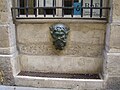
The Notre-Dame-des-Victoires (French pronunciation: [nɔtʁə dam de viktwaʁ]) is a minor basilica located on rue Notre-Dame-des-Victoires in the 2nd arrondissement of Paris. It was begun as an abbey church and constructed between 1629 and 1740 in the French classical style. Wikipedia · CC BY-SA
Restaurants in Vivienne
- 🍽️Fantine
- 🍽️Jour Richelieu
- 🍽️Côme Bourse
- 🍽️L'INCONTRO
- 🍽️Le Mesturet
- 🍽️Supermian
- 🍽️Accents
- 🍽️Empreinte
- 🍽️Fuchill
- 🍽️Bolo Rice Pot
Bars in Vivienne
- 🍸Les Bargettes
- 🍸Aubrac Corner Paris 2
- 🍸Hôtel Hana
- 🍸Chez Pulpe
- 🍸Le Biz
- 🍸Le Salon
- 🍸Le Cardinal
- 🍸Circonstances
Cafés in Vivienne
- ☕Shine Garden
- ☕Le Louvois
- ☕Montézuma Café
- ☕The Floor
- ☕Café Jirisan
- ☕Mex'iik
- ☕Culottée Café
Pâtisseries in Vivienne
- 🧁Pâtisserie Tomo
Bookshops
- 📚Librairie théâtrale
 Librairie Jousseaume
Cinemas, theatres & live music
- 🎭Zaïde or The Path of Light (Opéra Comique National Theatre)
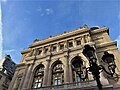 Opéra-Comique
The Opéra-Comique (French pronunciation: [ɔpeʁa kɔmik]) is a Paris opera company which was founded around 1714 by some of the popular theatres of the Parisian fairs. In 1762 the company was merged with – and for a time took the name of – its chief rival, the Comédie-Italienne at the Hôtel de Bourgogne. Wikipedia · CC BY-SA
Markets & delis
- 🧺Marché Bourse
- 🥘Legrand Filles et Fils
Where the street names come from
- place Boieldieu — François Adrien Boieldieu (1775-1834), French composer; near the Opéra Comique.
- rue Brongniart — Alexandre Théodore Brongniart (1739-1813), architect of the Palais de la Bourse; near that monument.
- rue Chabanais — Laid out by the Marquis of Chabanais on the land of the Hôtel de Saint-Pouanges.
- rue Chérubini — Marie Louis Charles Zanobi Salvatore Chérubini (1760-1842), Italian composer; near place Louvois, former site of the Opéra.
- galerie Colbert — Near the former hôtel Colbert.
- rue Colbert — Cut through by order of Colbert (1619-1683) on land belonging to him, coming from the former Mazarin palace.
- rue d'Amboise — Opened in 1781 on the land of the Hôtel Choiseul; it owes its name to the seigneury of Amboise, which belonged to the Duke of Choiseul.
- place Daniel Iffla-Osiris — Daniel Iffla-Osiris, born Daniel Iffla (Bordeaux - Gironde, 1825 - Paris, 1907), patron and philanthropist.
- rue de Gramont — Laid out on the site of the Hôtel de Gramont.
- rue de la Banque — Opens opposite the Banque de France.
- place de la Bourse — Site of the Palais de la Bourse.
- rue de la Bourse — Near the Palais de la Bourse.
- rue de Louvois — Opened on the site of the Hôtel Louvois.
- rue de Marivaux — Pierre Carlet de Chamblain de Marivaux (1688-1763), French playwright and writer; near the former Comédie italienne, today the Opéra Comique theatre.
- rue de Richelieu — Armand Jean du Plessis, cardinal, duc de Richelieu (1585-1642), French prelate and statesman, chief minister under Louis XIII; near his palace, which today has become the Palais Royal.
- rue des Colonnes — Street lined with a colonnaded gallery.
- rue des Filles Saint-Thomas — The convent of the Filles Saint-Thomas, on the site of which the Bourse stands today.
- boulevard des Italiens — Near the former théâtre de la Comédie Italienne, later the Opéra Italien, today the théâtre de l'Opéra Comique.
- passage des Panoramas — Panoramas had been set up here originally.
- rue des Panoramas — Near the passage des Panoramas.
- passage des Petits Pères — Near the rue des Petits Pères.
- place des Petits Pères — Former courtyard of the Petits Pères convent, widened in 1765.
- rue des Petits Pères — Near the former convent of the Reformed Augustinians, known as the Petits Pères (church of Notre-Dame des Victoires).
- passage des Princes — Opened on the site of a former lodging house known as the hôtel des Princes.
- galerie des Variétés — Near the théâtre des Variétés.
- rue du Quatre Septembre — Date of the proclamation of the Third Republic in 1870.
- rue Favart — Charles Simon Favart (1710-1792), French playwright; near the former Comédie Italienne, today the Opéra Comique.
- galerie Feydeau — Near the rue Feydeau.
- rue Feydeau — A Parisian family that held high office in the judiciary and the administration in the 17th and 18th centuries.
- rue Grétry — André Ernest Modest Grétry (1741-1813), Franco-Belgian composer; near the Opéra Comique theatre.
- rue Lulli — Jean-Baptiste Lulli (1632-1687), French composer of Italian origin; near the former theatre hall that was later called the "Opéra".
- rue Ménars — Opened on the site of the hôtel of président Ménars.
- galerie Montmartre — Near the rue Montmartre.
- rue Notre-Dame des Victoires — Runs alongside the church of Notre-Dame des Victoires.
- rue Rameau — Jean Philippe Rameau (1683-1764), French composer; near the former Opera house.
- galerie Saint-Marc — Outlet from the passage des Panoramas onto the rue Saint-Marc.
- rue Saint-Marc — Probably due to a shop sign (17th century).
- galerie Vivienne — Near rue Vivienne.
- rue Vivienne — Due to the Vivien family, to which Louis Vivien, lord of Saint-Marc, alderman in 1599, belonged.
Source: City of Paris, official street names (ODbL).
Real data: events from the City of Paris Open Data, places from OpenStreetMap. Availability changes continuously — open the tool to see what's open right now, around you.