Events near Palais-Royal
- 🎨Chinese seal-engraving workshop | Intro, advanced, creation
- 🎨Visual arts course | Chasse aux images | Spring Holidays 2026
- 🎨Chinese Painting Workshop: The Vital Breath
- 🎨Child & family workshop | Small brush, big brush | Intro to Chinese art
- 🎨Chinese calligraphy workshop: Mon trait authentique
- 🏛️Fashion in Majesty: Haute Couture and Tradition at the Court of Thailand
Monuments & viewpoints
 Saint-Roch, Paris
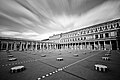 Les Deux Plateaux
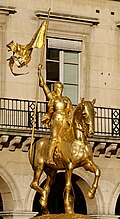 equestrian statue of Joan of Arc
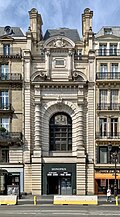 Au gagne petit
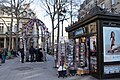 Le Kiosque des noctambules
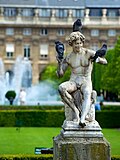 Snake Charmer
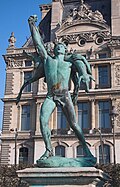 Retour de chasse
 Force et Tendresse
The Church of Saint-Roch is a 17th–18th-century French Baroque and classical style church in Paris, dedicated to Saint Roch. It is located at 284 rue Saint-Honoré, in the 1st arrondissement. The current church was built between 1653 and 1740. Wikipedia · CC BY-SA
Les Deux Plateaux, more commonly known as the Colonnes de Buren, is an art installation created by the French artist Daniel Buren in 1985–1986. It is located in the inner courtyard (Cour d'Honneur) of the Palais Royal in Paris, France. Wikipedia · CC BY-SA
Museums & galleries
- 🏛️Fashion in Majesty: Haute Couture and Tradition at the Court of Thailand
Restaurants in Palais-Royal
- 🍽️Kodawari Ramen (Tsukiji)
- 🍽️Pantagruel
- 🍽️Pho banh cuon14
- 🍽️Sam Sun
- 🍽️Zen
- 🍽️Kunitoraya
- 🍽️TORA TORA
- 🍽️EnYaa
- 🍽️Mystery Cuisine
- 🍽️Jantchi
Bars in Palais-Royal
- 🍸Résidence La Clef Louvre
- 🍸Hôtel Nolinski Paris
- 🍸Juvéniles
- 🍸Verjus
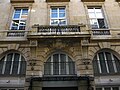 Grand Hôtel du Palais Royal
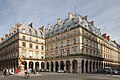 Hôtel Régina
- 🍸Le Roch Hôtel & Spa
- 🍸Le Petit Flore
The Hôtel Regina (French: [otɛl ʁeʒina]) is a grand hotel in Paris which opened in 1900. It is on the Place des Pyramides, across the Rue de Rivoli from the Jardin des Tuileries and an entrance to the Louvre. In the square in front of it is a gilded statue of Joan of Arc on horseback. Wikipedia · CC BY-SA
Cafés in Palais-Royal
- ☕Mimi Sando
- ☕Café Kitsune
- ☕Sunny Thé
- ☕Illy
- ☕Télescope
- ☕Verlet
- ☕KOI Thé Petits Champs
- ☕Don't Yell at Me
- ☕TeaYammi
- ☕Les cafés San José
Pâtisseries in Palais-Royal
- 🧁Copains Opéra
- 🧁Aki Boulangerie
- 🧁Takumi Pâtisserie - Opéra
- 🧁L'Instant Cacao
- 🧁Sébastien Gaudard
Bookshops
- 📚Delamain
- 📚Librairie Japonaise Junku
Cinemas, theatres & live music
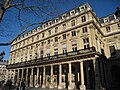
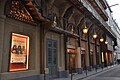
The Salle Richelieu (French pronunciation: [sal ʁiʃ(ə)ljø]) is the principal theatre of the Comédie-Française. It is located in the Palais-Royal in the first arrondissement of Paris and was originally constructed in 1786–1790 to the designs of the architect Victor Louis. It seats 862 spectators. Wikipedia · CC BY-SA
The Théâtre du Palais-Royal (French pronunciation: [teɑtʁ dy palɛ ʁwajal]) is a 750-seat Parisian theatre at 38 rue de Montpensier, located at the northwest corner of the Palais-Royal in the Galerie de Montpensier at its intersection with the Galerie de Beaujolais. Wikipedia · CC BY-SA
Markets & delis
- 🥘Le Mille Pâtes
Parks & gardens
Where the street names come from
- place André Malraux — André Malraux (Paris, 1901-Créteil, 1976), French writer and politician.
- rue Catinat — Nicolas de Catinat (1637-1712), Marshal of France; near the place des Victoires.
- passage Colbert — Near the galerie Colbert.
- place Colette — Gabrielle Colette (1873-1954), French novelist.
- rue Croix des Petits Champs — The croix des petits Champs stood at the corner of this street and the rue du Bouloi.
- rue d'Argenteuil — Former road to Argenteuil.
- galerie d'Orléans — Built in 1829 by order of the duc d'Orléans, who reigned under the name of Louis-Philippe.
- galerie de Beaujolais — Near rue de Beaujolais.
- passage de Beaujolais — Near rue de Beaujolais.
- péristyle de Beaujolais — Near rue de Beaujolais.
- rue de Beaujolais — Name of a son of the Duke of Orléans.
- galerie de Chartres — New gallery of the Palais Royal, so named in honour of the Duke of Chartres, later Duke of Orléans, son of King Louis-Philippe.
- péristyle de Chartres — So named in honour of the Duke of Chartres, son of Louis-Philippe, born in 1840.
- péristyle de Joinville — François Ferdinand Philippe Louis Marie d'Orléans, prince de Joinville (1818-1900), third son of King Louis-Philippe.
- rue de l'Échelle — The gibbet ladder of the bishops of Paris probably stood in the former rue de l'Echelle.
- galerie de la Cour d'Honneur — This gallery runs along the main courtyard of the Palais Royal.
- passage de la Cour des Fontaines — Near the former cour des Fontaines (now place de Valois).
- galerie de Montpensier — Near the rue de Montpensier.
- passage de Montpensier — Near the rue de Montpensier.
- péristyle de Montpensier — Near the rue de Montpensier.
- rue de Montpensier — Created in 1784 by the Duke of Orléans on part of the garden of the Palais Royal; it took the name of Antoine Philippe d'Orléans, Duke of Montpensier, his second son (1775-1807).
- galerie de Nemours — The Duke of Nemours, son of Louis-Philippe.
- passage de Richelieu — Near the rue de Richelieu.
- rue de Rohan — The cardinal de Rohan, Grand Almoner of France, administrator of the hospital of the Quinze-Vingts, on the site of which this street was opened.
- galerie de Valois — So named in honour of the duc de Valois, eldest son of the duc d'Orléans (Louis-Philippe)
- passage de Valois — So named in honour of the duc de Valois, eldest son of the duc d'Orléans (Louis-Philippe)
- place de Valois — So named in honour of the duc de Valois, eldest son of the duc d'Orléans (Louis-Philippe)
- péristyle de Valois — So named in honour of the duc de Valois, eldest son of the duc d'Orléans (Louis-Philippe)
- rue de Valois — So named in honour of the duc de Valois, eldest son of the duc d'Orléans (Louis-Philippe)
- rue des Bons Enfants — This street owes its name to the collège des Bons Enfants, founded in 1208 for thirteen poor schoolboys.
- passage des Deux Pavillons — At the entrance stand two pavilions facing the rue de Beaujolais.
- rue des Moulins — This street is named after the mills on the hill, which still existed in the 17th century.
- rue des Petits Champs — Cut through open fields (17th century).
- galerie des Proues — A gallery in the courtyard of the Palais Royal where one can see the ships' prows that decorated the palace of Cardinal de Richelieu, head and superintendent general of navigation.
- place des Pyramides — Near the rue des Pyramides.
- rue des Pyramides — Victory won by the French army in Egypt on 21 July 1798.
- rue du Colonel Driant — Emile Auguste Cyprien Driant (1855-1916), French officer and military writer, who died on the field of honour.
- galerie du Jardin — This gallery leads to the garden of the Palais Royal.
- place du Lieutenant Henri Karcher — Henri Karcher (Saint-Dié, 1908-Sarrebourg, 1983). Surgeon, volunteer Resistance fighter. At the liberation of Paris he seized the headquarters of the commander of the Paris garrison, then became a politician.
- place du Palais Royal — Located in front of the Palais Royal.
- rue du Pélican — Corruption of an obscene name given to it because of the population living there.
- passage du Perron — Leads to a stairway giving access to the Palais Royal.
- galerie du Théâtre Français — Gallery adjoining the Théâtre Français.
- passage Hulot — Mr Hulot, owner.
- rue Jean-Louis Debré — Jean-Louis Debré (Toulouse, 1944 – Paris, 2025). French politician.
- rue La Feuillade — François d'Aubusson, duc de La Feuillade (1625-1691), marshal of France, creator of the place des Victoires; in the vicinity of that square.
- rue La Vrillière — In the vicinity of the hôtel de La Vrillière, which has now disappeared.
- place Mireille — Mireille Hartuch (Paris, 1906-Paris, 1996), composer and performer, creator of the famous "Petit Conservatoire", the first training institution devoted to song.
- rue Molière — This street leads to the fontaine Molière, erected opposite the house where Jean-Baptiste Poquelin, known as Molière (1622-1673), died.
- rue Montesquieu — Charles de Secondat, Baron de la Brède et de Montesquieu (1689-1755), French moralist, thinker and philosopher.
- boulevard Périphérique — Peripheral position of this road in relation to Paris.
- passage Potier — Mr. Potier, property owner.
- rue Radziwill — The passage Radziwill, now gone, ended here. It ran through a house built in the 13th century by Prince Radziwill.
- rue Saint-Honoré — Owes its name to the former collegiate church of Saint-Honoré, once located in the cloître Saint-Honoré.
- passage Saint-Roch — Near the church of Saint-Roch.
- rue Saint-Roch — Runs alongside the church of Saint-Roch.
- rue Sainte-Anne — Anne d'Autriche was Queen of France when the opening of this street was begun.
- rue Thérèse — Marie-Thérèse of Austria, wife of Louis XIV.
- rue Villedo — Guillaume and François Villedo, masters general of the king's buildings and masonry works, owned houses in this street in the 17th century.
Source: City of Paris, official street names (ODbL).
Real data: events from the City of Paris Open Data, places from OpenStreetMap. Availability changes continuously — open the tool to see what's open right now, around you.